
Charlie Wells: What Happened To Millennials
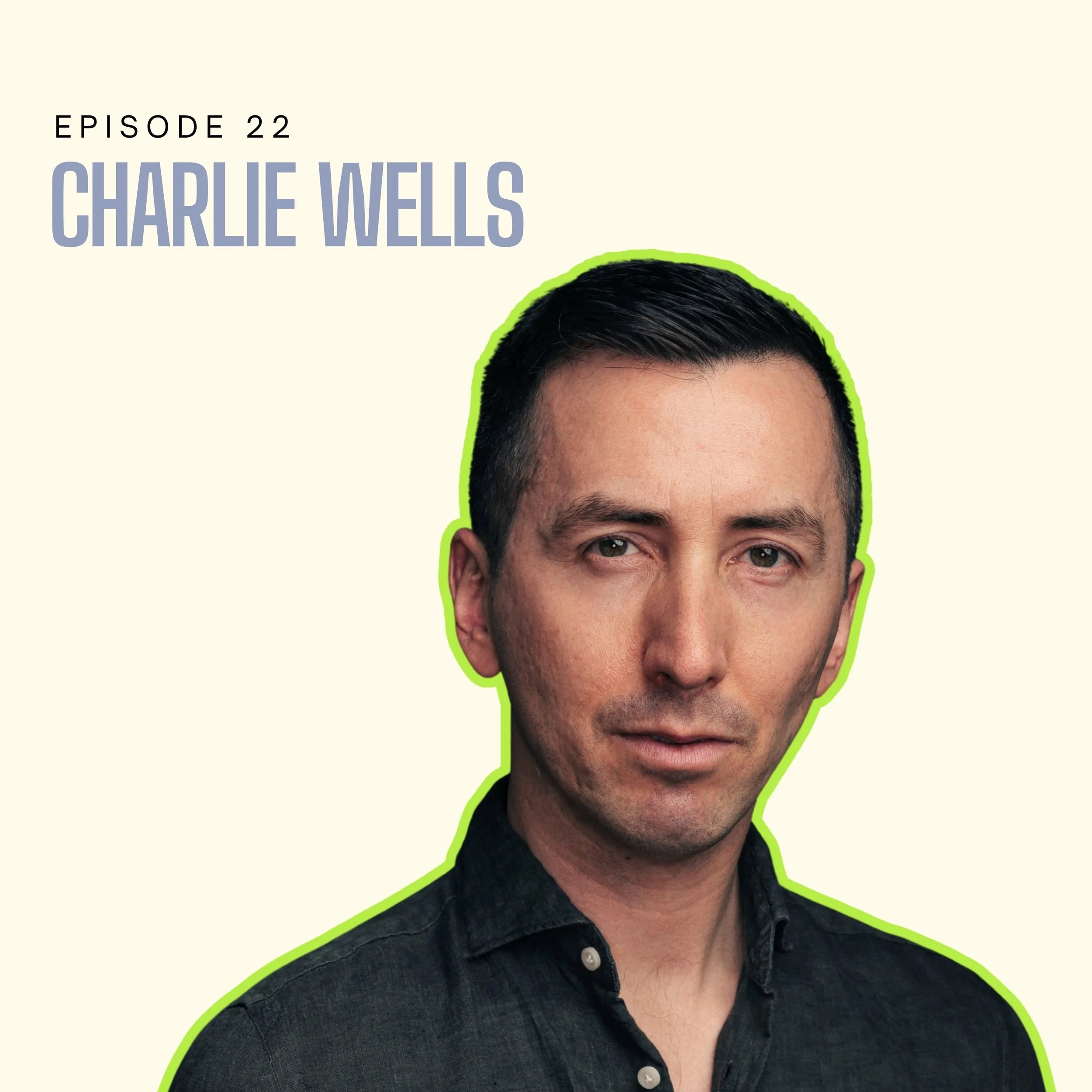
Journalist Charlie Wells is a Millennial — and by now, something of an expert on the Millennial generation, too. In his debut book, What Happened to Millennials: In Defense of a Generation, he shares the stories of five people whose lives reveal what it’s really been like to grow up Millennial — through the early optimism, the crises that shaped us, and all the change we’ve weathered along the way.
Hear Charlie talk about:
Why he wanted to explore what it’s really been like to grow up as a Millennial
How he chose the five people whose lives he shares in the book
How major moments like 9/11 and the rise of the internet shaped Millennial identity
The nostalgia objects — from Tamagotchis to AIM screen names — that connect us across divides
Why he feels proud of Millennials, and what he hopes we carry forward into the next chapter of adulthood
Mentioned in this episode:
What Happened to Millennials: In Defense of a Generation by Charlie Wells
Charlie Wells on Instagram and X (Twitter)
“We’re adults and we’ve overcome a lot of obstacles as this group of people. It’s okay to celebrate that.
”
Episode 22 Notes
Stacy Raine: This is Tell Me What It’s Like — a show about defining moments, life-changing decisions, and extraordinary challenges. I’m Stacy Raine.
Every generation is bestowed a name. The generation I was born into, those born between around 1981 and 1996, was at first called Gen Y. But eventually, we became known as Millennials. We started becoming adults at the turn of the century, after all.
Journalist Charlie Wells is a Millennial as well, and perhaps an expert on us now too. He just released his first book all about us, this generation that is so misunderstood. It’s called What Happened To Millennials. His goal is to set the story straight.
Charlie, welcome to the show.
Charlie Wells: Thank you for having me.
The Value in Defining an Entire Generation
Stacy Raine: Charlie, your new book focuses on our Millennial generation, and you and I are both part of it. Before we get into what you discovered, what is the value in defining an entire generation — such a huge group of people?
Charlie Wells: I think one of the values is that it helps us understand each other. By “us,” I mean the collective group of about 72 million American Millennials, but also other generations. People who might look at us with fear, disdain, or concern about the future of the country. Or people younger than us who wonder why we’re so strange or weird. One of the phrases that gets used about us is that we're quote unquote “cringe.”
The real goal of this book was to help us understand each other better.
Being More Nuanced with Generational Definitions
Stacy Raine: Would you say these definitions are generally accurate?
Charlie Wells: That’s a great question, and it’s the one I was hoping you would ask. There’s an emerging view that we’ve become too astrological with generations — that we say, “You’re a Millennial, so you’re this,” or “You’re a Baby Boomer, so you’re that.” It can be fun and make people feel like they’re part of something, similar to saying you’re a Virgo or an Aries. But it can also fit people too tightly into boxes and create hostility.
Increasingly, from the academic side and from critics of generational thinking, the idea is this: Yes, let’s talk about generations. They matter, and they do help us understand each other. But we should approach them in a more nuanced way, without being so rigid about specific definitions.
Stacy Raine: You do that really well in this book. You’ve clearly done a lot of research — I kept having “aha” moments while reading it. You also followed five people to help illustrate our generation. I’m curious where you found them.
Can You Tell the Story of an Entire Generation?
Charlie Wells: Yeah, that’s a really good question. How do you tell the story of an entire generation? 72 million people. Are you going to be able to say one definitive thing about that group? I don’t think you can do that. I think you can make some points. I think you can look at things that happened. And then I think you can look at how a lot of these big trends intersected in people’s lives.
That is what motivated the structure of this project.
As far as finding these five people, basically what I wanted to do is say: what are some of the big intersecting points that have really shaped who we are as a generation? If we’re going to look back at the past 25 years, that point when we started turning 18, becoming adults at the turn of the new millennium, what big events affected this big group of people? It was looking at some of those events and trends, and trying to find individuals who would talk to me about how some of these big macro events affected them in that micro way, in that personal way.
Stacy Raine: Yeah, and you did that because you found a woman who lost her dad in 911. You found the person who was the inspiration behind the Dream Act and a few others that really do exemplify some of the things that we’ve been through. You even talked about Britney Spears quite a bit, who is one of us.
Charlie Wells: Yes, I did.
Stacy Raine: There’s a lot that happened as we grew up and as we became adults. For me, reading this brought back a lot of memories. I remember where I was when the 2008 collapse happened, and all of these different things. But the thing that you talk about is that we’re kind of misunderstood. We’ve been called “failure to launch.” “Gen-me.” People have called us selfish. Why do you think that is? What’d you learn?
“Quarter Life” and the Stories We Internalized
Charlie Wells: This is a big one! There are different phases of life that every generation goes through. Depending on whether you’re one year old, ten, or one hundred, throughout time, people are going to go through certain developmental stages, and those stages are going to be similar. You might call them different things, and they might not look exactly right, but these are life stages.
And one of the things that a lot of experts have said recently is we need to think about when we’re looking at generations, not just the year people are born. We also need to look at history, the things that are happening, but also life stage. A point where a lot of these reputational asides about millennials started to come up was when we were in our 20s and 30s, that awkward time a really fascinating psychoanalyst calls “quarter life.”
We were going through that phase of life when social media was really expanding, when the internet was really expanding, and when there was a lot of focus on this huge group of people entering the workforce, and how they were doing things in a different way following the recession.
There was a lot of economic strife going on. And I think that is where a lot of the stories that other people told about millennials came from. And also some of the stories we started to tell about ourselves, where we internalized a lot of that.
“Follow the Money” and Writing About Millennials
Stacy Raine: And so you say we started to “say about ourselves” because you are in fact a millennial. I’m curious when you got interested in this topic of who we are, what the narrative is about us, and why. When did the idea come for this book?
Charlie Wells: I’m a journalist by trade. It’s something that I’ve been doing for the past 13 years. One thing that tends to happen in a newsroom, particularly with young people, is older editors will say, “Hey, young kid, go write about you crazy young kids.”
And that was fun. It was great. I got to talk to people across the country throughout my career. I mostly write about personal finance — how people are spending money and how they’re saving. There’s this big-picture, highfalutin phrase in journalism: “follow the money.” You’ve probably heard it before. People often associate it with Watergate, politicians, or big corporate executives. But you can also follow the money in an everyday person’s life. It reveals what they can do, what they can’t do, what’s important to them, and how their priorities are changing over time.
With this book, there was a point about six or seven years ago when I started to feel like the stories I was writing about millennials and their money — about “young people” who weren’t so young anymore. They were getting married. I remember when I first started writing about “the millennial mom,” and that sounded so crazy and new and fresh. Editors loved the story that I wrote about millennial moms. And there’s a story out there about millennial parents getting into unicorn toys for their children, remembering the eighties and thinking about stuff from the past.
It was over a decade ago that I wrote that story. So there has been this maturation that I’ve had the honor of following through our generation. I wanted to write about that transformation and back some of these stories that we tell about ourselves.
There was a point a few years ago when millennials became majority homeowners, when a majority of our generation started to own homes. And I’m sure you remember how that seemed like it would be impossible. A lot of us were entering the workforce during or after the housing crisis when that sector of the economy collapsed. It felt like we would never own homes.
But now this generation is a generation of majority homeowners. What does that mean? I wanted to explore some of those changes in this book.
“We’re Not Failures to Launch”
Stacy Raine: Yeah, almost like a sense of achievement for us to do something we thought maybe we wouldn’t be able to do.
Charlie Wells: Yeah, we’re not failures to launch. We have reached these milestones. And I think some people might ask, are these milestones important? Should we be focusing on other things? Is it fair to keep measuring people by old ways of achieving things? And I think something that I cover in this book is that a lot of those milestones are harder to reach than ever before. And yet we have reached them. So let’s celebrate that.
Something else about millennials that often gets bandied about, to this day, is the idea that we’re not growing up. There are still articles being written about that. We're “perpetual children.” It’s okay to be an adult. It’s a good thing. It’s fine. And actually we are, and it’s cool. And maybe it’s cringe, but we’re adults and we’ve overcome a lot of obstacles as this group of people. It’s okay to celebrate that.
Stacy Raine: Did you get that feeling as you were writing this book — like, wow, look what we’ve been through?
“Family Formation” and What Unified the Stories
Charlie Wells: There was a lot of “look what we’ve been through.” There was a lot of focus on family formation. It was people in very different walks of life, different political backgrounds, different parts of the country. But when I look back at the recording, one of the big themes that came out in each of these five lives is how they formed a family.
There was a time when people thought millennials were killing off cars with Uber, killing off hotels with Airbnb, and killing off more traditional milestones like the family. But what I found was really important for people, whatever they were, whatever they were doing :
People cared about going home to a nice place to live, being around people that they liked, and maybe having something nice to eat. That unified all these people from very different backgrounds.
And I liked hearing about people's very traditional, and very not traditional backgrounds. That was really important to people.
Stacy Raine: Do you feel proud of us, Charlie?
Charlie Wells: I do. I think it’s a big group of people, 72 million people.
But I would say that to come through a period like the one we came through in the 90s, when there was this upswing of optimism — when the West had won, the Berlin Wall had fallen down, and it seemed like we had reached what a lot of experts kind of called the end of history.
And then to go through 9/11, and then to witness the wars abroad, which so fundamentally shaped so many members of our generation in ways that, just years before, I think we hadn’t even been expecting.
And then to go through the economic crisis, and then to live through the pandemic. There is a lot of stuff that, when a lot of us were in childhood — when a lot of your expectations are set — we were not expecting. I think when you go through that, you get wisdom, right?
Nostalgia, Objects, and Talking to Strangers
Stacy Raine: Yeah, it’s definitely a walk down memory lane, for sure. I mean, this book, like I said, brings up so many things that make you think, wow, yeah, that was actually really hard.
Or just thinking about me personally — how I reacted to some of these things.
It hasn’t been easy, but I’m glad you’re proud of us. Is it sort of strange to be a millennial investigating us millennials and how we react?
Charlie Wells: Yeah, it was. A lot of fun, I have to say. I think there’s something to be said about connecting to other people through nostalgia, and that’s something I loved. I’m one of those people who loves going on a Wikipedia deep dive of random cultural stuff — like, why was that happening? Or what was really going on? Even things like company logos — why did it change from one color to the next?
And no one will pretend that we’re at a time in America where there are not a lot of divisions between people, across many different political ideologies and perspectives on the world. But something I really liked is that you can talk to all these different people when you start talking about objects. When you start talking about that funny old little phone that we thought was the future — that Nokia phone — or when you talk about the types of food we ate, like Dunkaroos.
Everyone has a story about Dunkaroos. Or old television shows.
You can get people to talk about memories from a time when we weren’t so divided. And these kinds of objects get people to talk about memories, and then memories just get people talking, right? And I think you have a great show. You get to talk to people, you get to talk to strangers and I think that’s something we don’t do a lot anymore, within the communities we find ourselves in, or even outside of them. And I got the honor, the real honor to go outside my community and talk to people who were in very different ones, who opened up their lives to me. And that was just the coolest thing to do.
Stacy Raine: This is a great point just in terms of conversation and getting to know people. So you would bring up objects to them? How would you do that?
AIM Screen Names, Blackberries, and Tamagotchis
Charlie Wells: Yeah. I think the number one thing would be to ask people, what was your AIM screen name? That’s one that really gets people thinking about sitting at their parents' enormous desktop computer, talking to their friends. That was a big one.A lot of this stuff was tech-related. There was a lot of tech nostalgia. Even now the BlackBerry is making a comeback in a weird way. There’s a company releasing BlackBerrys again for people who want them.
So talking about things like that. The Tamagotchi was another big one I talked about. Food items, too.
Stacy Raine: Right, you were big into that. You had, what, nine or something?
Charlie Wells: I will admit to being a very serious caretaker of a number of Tamagotchis, which I would say made me very good at attending to smartphone notifications in the workplace. Whether that’s good or bad is a whole other thing. I was primed to be this kind of internet responder. Whether or not that’s good or bad, is another thing. I’m primed to be this internet responder.
Stacy Raine: Yeah. Because they were little digital pets you had to care for. They would get hungry, and you had to feed them.
Charlie Wells: And they’re back.
I was at a bar the other month and literally saw a woman about our age waiting for a glass of wine. While she was waiting, she was feeding her Tamagotchi. She told me she’d kept it alive for nine days and couldn’t talk to me because she had to feed it. So maybe that’s bad, right? I’m here talking about talking to strangers, and the stranger had to feed her Tamagotchi.
Landlines, Being “Done,” & the Rise of the Smartphone
Stacy Raine: Well there is a lot of stuff coming back that I’ve noticed. Record players, for example. People are much more into records now than when CDs became popular.
Charlie Wells: Vinyl — you see it in stores now, right?
Stacy Raine: What was I thinking about the other day? Landlines. For millennial parents like me, with the rise of smartphones, it’s not necessarily the best thing for kids.
Charlie Wells: No, not at all.
Stacy Raine: But kids still want the independence of calling their friends. So parents are getting landlines again. Kids can call their friends, and they’re not on the internet all the time.
Charlie Wells: Yeah, and then you hang up and you’re done. And there’s something good about that.
Stacy Raine: So reading this made me wonder how much of our experience, I mean, it is obviously experiential, that's making us revert back to these old things. As we think about the rise of social media as we become adults, whether that’s a good or a bad thing, we’re all making these judgments now, and that’s influencing the way that we behave.
“Boredom Element” & Independence
Charlie Wells: I think there’s a life-stage element to this. When demographers talk about life stages, we’re now — whether we like it or not — approaching midlife and what comes with that for many people is parenting. When you become a parent, when you are going through that stage of life, if you do get to that milestone, you look back on your own childhood. You think about what went right, what went wrong, and what you want the future to hold.
This came up often in conversations for the book. Many of the people I spoke with are parents, and they are at a point where they are looking back to what they really valued about life in the late 80s, in the 90s. One of those things was the boredom element — that you could be bored, that you could disconnect. There was this disbelief. I remember talking to one of my characters — I couldn't include this in the book — he talked about how his mother would drop him off at a movie theater with a couple of quarters and say, if you need me, call me — otherwise, walk home. He really valued that memory.
A lot of the memories in the book are about things people valued in their childhoods: independence, freedom, and the ability to disconnect. This is not an endorsement of leaving your child at the movie theater today and driving off, but I think it speaks to some of that independence and just reflecting back on some of the things that we went through.
Stacy Raine: I was saying to my kids just yesterday, “Go outside and play. I want you to be independent.”
“I want you to have a little bit of time outside where you’re just running around, because we did that and we have good memories from it.”
And I was also thinking, as I start to read about all these things that happened as I was becoming an adult, it’s just nice to go back and think about times before that.
“Bridge Generation” and All the Before-and-Afters
Charlie Wells: That’s an element that a number of people brought up — this sense of being a kind of bridge generation. I think every generation has this to some extent, but millennials have it pretty starkly. We remember life before and after the internet was even in our homes. I’m sure you remember the moment the internet came into your home, or your college, or wherever.
We remember life before and after 9/11.
We remember before and after the Iraq War.
We remember life before and after the recession.
There are so many “before and afters” of these sort of pivotal moments that this generation has gone through, before and after the smartphone as well. Because of that, there’s this sense of wanting to be a bridge: looking back, taking what we liked, reassessing it, and then bringing it forward. And I think we’re at that moment in life. We’re at that kind of midlife — which is even hard to say out loud — and there are a lot of definitions of what midlife means. It may be a little early, but we’re at a point where we’re reflecting on what happened during those years.
A Love-Hate Relationship with Social Media
Stacy Raine: Right. And we’re trying to take the good and reflect it back into the next generation. Because, like you were saying, I have a little bit of a love-hate relationship with social media. There are so many good things about it, especially since I don’t live near my family, keeping in touch with old friends is such a nice thing. But I also worry about the next generation and this inability to just be bored, to not always be connected.
Charlie Wells: And not know who’s looking at you, right? That’s one of the things. There’s so much research on how addictive social media is, but I think part of it is this sense that you’re always being looked at. On Instagram, you can see who saw what you posted, whether they liked it or not, or whether they just moved on.
And I’m glad you brought this up about millennials, because we weren’t ready for social media. It rolled out when we were in our teens and our twenties. I remember — and I’m sure you do too — this sense of no, this is so good. It’s the future. It’s great for work. You need social media.
We were told that your network on social media was more important than your actual network in the workplace. And I don’t think that’s necessarily true. The people you’re immediately working with can really determine the fate of your job.
I also remember that with social media there was a moment where it felt like we had to post everything. Every life milestone had to be vetted, almost like you had a PR team. Everything was staged. That’s one of the negative things other generations will say about millennials — that our pictures had to be perfect, that there was one photo that mattered.
Gen Z might be a little more loose with it, maybe a little bit more authentic. But that posing was a pressure. There was a reason we were doing it. It might seem funny now, but there's a reason why people do things and it was this pressure that we weren't ready for.
Stacy Raine How do you think that it influenced us, us millennials?
The Stories We Tell Ourselves
Charlie Wells: I think there was pressure on the social media front. And something else I wanted to explore in the book was this idea of story — the sense that we may be too beholden to the stories other people tell about us, and the ones we tell about ourselves. Instagram, one of the most millennial social media platforms, literally has a feature called Stories. We didn’t come of age with this technology, which might be a blessing, but one of the curses is: what happens if you want to change your story? What happens if you grow over time? What happens if you change your views on something, but you’ve got this whole record of things you’ve said before?
It’s hard to shift away from that.
I think that's something that has marked us and something that we could probably work on because not everybody needs perfect talking points for what they’re doing. Not everyone needs that perfect Instagramable life. Some of the people in this book, when they finally realized they could let go of that, they became much happier.
Changing the Millennial Story
Stacy Raine: Yeah, for sure, I can totally understand that. So your whole thing with this book is to try to change the narrative. How do you think we’re doing now?
Charlie Wells: I think we could use some work on the story. I think a focus on adulthood would be a good idea, because others have literally written about us — about how we’re completely rejecting adulthood, not hitting milestones, and being irresponsible. That’s one side of it.
The other side — and this is another reason I wanted to write this book — is some of the intergenerational negativity that comes from the top, but also from the bottom. A lot of these critiques early on came from baby boomers.
Early on, there was a lot of talk about how we weren’t launching. But then we internalized that narrative and started being very anti-boomer, blaming baby boomers for everything and blaming them for the situation we find ourselves in. But if you look at some of the things we often talk about, people will say, for example, that baby boomers came up with the 401(k) system and the current retirement system.
But the average baby boomer was something like 23 years old when the law Congress passed to set up that retirement system came into being. Or people might blame Ronald Reagan for taking the country in a more right-wing direction, but Ronald Reagan wasn’t a baby boomer — he was born in 1911. So I think getting some of the facts right is important, and maybe not getting distracted by those narratives. Instead, we should focus more on the big problems we face, because one of the biggest problems millennials face is inequality within our own generation.
The richest millennials are way richer comparatively to the poorest millennials than baby boomers were relative to each other.
So if you're going around talking about how baby boomers put us in this situation, that can distract you from asking: what do we, as the inheritors of this country and this economy, need to do for the future to solve these problems? Because there is a lot of wealth within the millennial cohort. There’s a lot of wealth coming in, but there’s also a big gap between people who have a lot and people who don’t.
There’s a big gap in home ownership between white people and Black people. There’s a big gap between people who will inherit money from their families and those who won’t.
I think bringing out those narratives within the millennial cohort is an example of why we need to think about ourselves and the differences within our own generation a little more carefully.
Millennials Coming into Leadership Roles
Stacy Raine: That’s a great point. You said that we’re about to have our shot — that we’re about to be the leaders and step into political and leadership roles. Based on your research and everything we’ve been through, that we’ve overcome and accomplished, what do you think the world can expect from us?
Charlie Wells: I think the world can expect people who are willing and able to change, because we’ve gone through a very significant amount of change over time. Some of the most powerful people in the country are millennials.
The vice president is a millennial.
Mark Zuckerberg is a millennial.
Taylor Swift is a millennial.
Sam Altman of OpenAI is a millennial.
So we are already stepping into enormous shoes and positions — not only in large, visible roles, but also in the home, at school. We are teachers. We are firemen. We are the people who tell the stories about our country to younger Americans. I think getting the story right is really important — embracing the adulthood that we have been building over literally the past quarter century. The oldest millennials have now been adults for 25 years. Some of us, our kids, are in their 20s.
I think shifting the focus on the things we’ve accomplished is important. And to your point about what we can expect, I think it comes back to change. The way we thought things would go back in the 90s, when a lot of our expectations were set, went in a very different direction. And we responded to it. People took up the ultimate sacrifice to defend the country. People made enormous sacrifices just to get homes for themselves.
One of the most inspiring stories I wrote about in this book is a guy who moved across the country. He made really big sacrifices to his own career so that his family could buy a home. He moved thousands of miles, and this was hugely important to him, to his wife, and to his two kids. I think this is a theme we share as a group of people, and talking about it is good.
Writing His First Book
Stacy Raine: Right, absolutely. So this is your first book. It took you four years to write. You immersed yourself in this research, in these people’s stories, and in our story as a millennial generation. How does it feel to have it out in the world?
Charlie Wells: It feels great. It’s such an honor to talk about these people’s lives. It was such an honor to go on the journey with them. As I was interviewing many of these subjects, they hit life milestones. They had children. They had career changes. They got engaged. I don’t want to give away any spoilers, but it was really cool to see that kind of development over time.
As a writer — and I think you hear about this — I miss thinking about those things now that it’s out. I’m talking about the book, but I’m not sitting there thinking about these lives anymore, and that’s something I’ll have to get used to.
But it was a lot of fun. And something else I hope people take away: some writers read what people say about their work, some don’t. I do read what people say. I’m one of those people. I feel like I can deal with it in a mature way. One comment that really moved me from someone I don’t know was, “This book made me feel less alone.” We are at a point in our generation, and in our country, where there’s a loneliness epidemic. If I can help someone feel less alone, even in the tiniest way, even just one reader, that makes me feel really, really good.
We’re Not Alone
Stacy Raine: I can totally see that. As I was reading it, it almost felt therapeutic, because I kept thinking, wow, we went through a lot.
Charlie Wells: Other people did this stuff, right? We’re not alone.
I think one of the things is that we don’t talk to each other a lot — even about these more everyday milestones that we hit. Because of my job as a personal finance reporter, I get the pleasure of talking about these milestones. I get to call people the day after they’ve lost their jobs and talk about it. I’ve been laid off before, and you realize, okay, this other person went through something like me. I’ve talked to people about marriages and divorces, about preparing for some of the worst moments and some of the best moments of their lives. And that, I think, has been helpful.
I hope that if people read about these milestones in other people’s lives — these challenges — they’ll feel better about what they’ve done, what they’ve gone through, what they’ve had to cope with, and what they’ve accomplished too. Because these are real accomplishments.
Stacy Raine: Yeah, and that’s kind of what I was feeling too — just going through all the things that we, as a generation and as a world, went through. I don’t know that I’ve ever really sat back and thought to myself, look at what we lived through.
I was new in college when 9/11 happened. I had just started one of my early jobs when the 2008 financial crisis happened. And I remember thinking, I’ve only been here a month — am I going to get let go? Those were big things, and I don’t think I ever paused to think about what we went through together. In that way, it does feel therapeutic.
You’re leading people down memory lane as they read your book. How do you feel about that?
“Taking a Beat” to Reflect
Charlie Wells: I think it’s a big responsibility. I hope I did it justice. I think a lot of these moments matter so much to people. Taking a beat, taking a pause — we don’t always do that because we are incredibly busy. There are way more distractions in life now than there were for other generations. Sometimes it’s about opening a book, or not even opening a book, just taking a walk, stepping away from the computer. That’s something I talk about with a lot of experts in my day job.
Put the phone down. Shut the laptop. Go on the walk. I think taking a little bit of a beat, taking a little bit of reflection, and looking back is really important, especially as we hit the next phase of life. Whether that’s parenthood, midlife, or leadership — wherever it is in the country, wherever it is in a company, or wherever it is in the home. Having that perspective and taking that moment is really important. I think now is a good time to do it.
Stacy Raine: So on that note, you’ve written a book about us millennials. You’ve done a lot of research, and I know you’ve learned a lot through this process. What do you wish for our millennial generation as we move forward?
Charlie Wells: I hope that we can bring back the optimism we once felt, along with our ability to change. I think those two things really go hand in hand. We have a lot of optimistic memories from childhood, but we’ve also dealt with a great deal of change over time. Realizing and celebrating the fact that you can handle big change is incredibly powerful.
I think that realization can actually make us more optimistic. It becomes a virtuous cycle, and I hope those two things can go together.
Stacy Raine: Charlie, thank you so much for joining me on Tell Me What It’s Like to talk about us millennials, what we’ve been through, and where we’re going.
Charlie Wells: Thank you so much for having me. It was a pleasure.
Continue the Conversation
Listen & Follow Tell Me What It’s Like
Follow the show so you don’t miss future conversations about uncommon experiences and the perspectives they’ve shaped.
Know someone who would enjoy this story?