

How Cities Are Designed: Creating Walkable Places with Jahnavi Kirtane
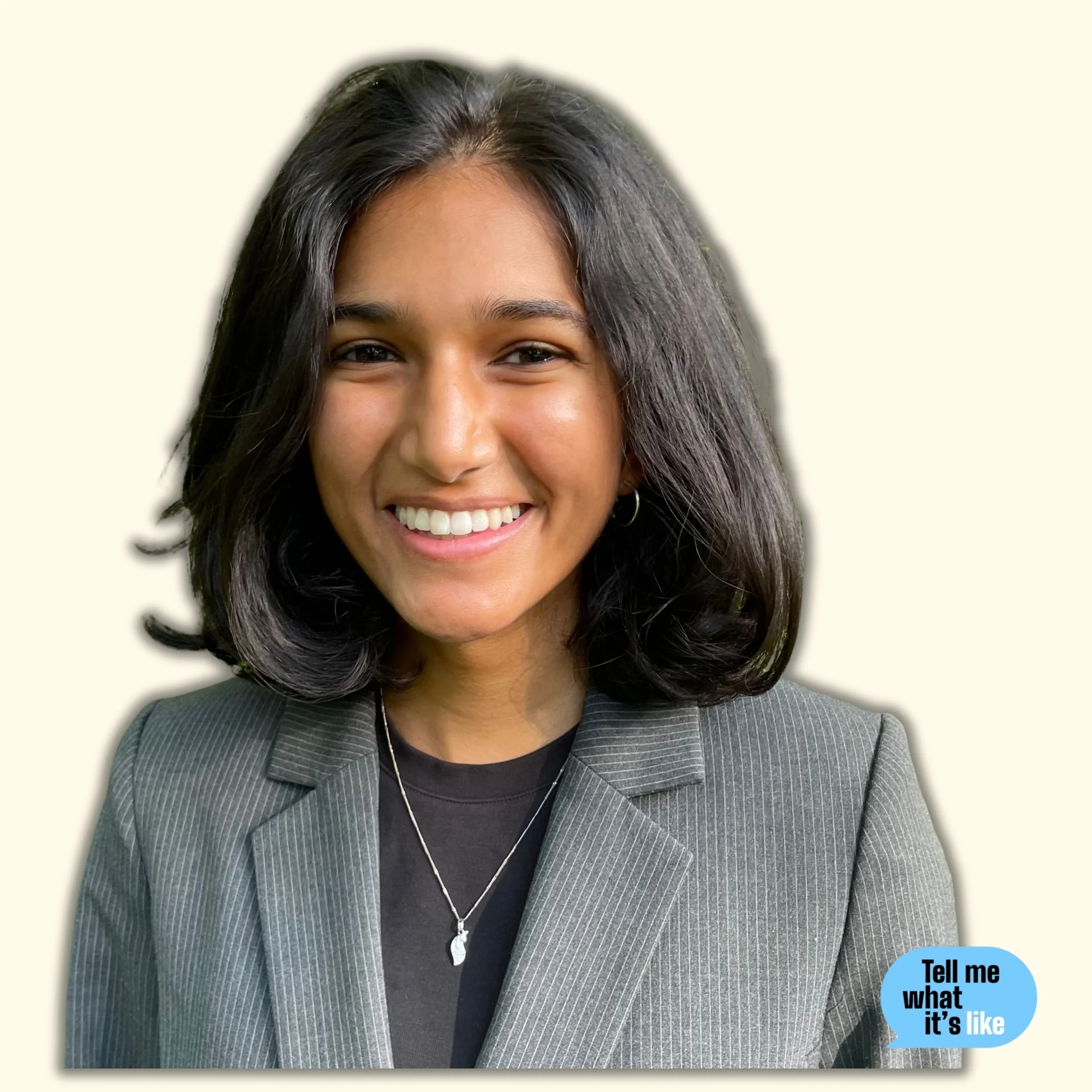
Cities might feel like they just develop over time, but in reality, they are shaped by decisions people make. Decisions about transportation, where we build homes and businesses, and what gets prioritized.
Urban planner Jahnavi Kirtane had a typical American childhood, which included life in the suburbs and getting everywhere by car. Then she went to high school in New York City and saw how kids were interacting with the world in a completely different way. That experience put her on the path to becoming an urban planner at one of the top firms in the country.
Hear Jahnavi talk about:
Her experience growing up in two very different places
Why so many places in the U.S. are build around cars, and how it impacts access, independence, and everyday life in ways most of us don’t realize
What “walkability” actually means and how it shows up in daily life
The kinds of decisions that shape how cities function
How design influences the way we live
Mentioned in this episode:
Walkable City, by Jeff Speck
Speck Dempsey, the planning and design firm where Jahnavi works
Jeff Speck’s TED Talk, The Walkable City
“Walking is really good for you, both your physical health and your social health and emotional health.”
Transcript
Stacy Raine: This is Tell Me What It's Like, the show about life-changing decisions, extraordinary challenges, and defining moments.
I'm Stacy Raine.
Jahnavi Kirtane grew up in the suburbs of New Jersey. Like most places in America, her hometown was one where you needed a car to get around. Then she got the chance to attend school in nearby New York City, and she was struck by something when she got there.
She wasn't nearly as independent as her peers, didn't quite get the world in the way that they did. They had been exploring their world largely on their own for years at that point, because in New York City, they didn't need a car to do it.
It got her thinking about why her community was the way it was and put her on the path to her current career as an urban planner.
Jahnavi, welcome to the show.
Growing Up in New Jersey vs. Exploring New York City
Jahnavi Kirtane: Amazing. Well, I'm so glad to be here right now. I'm really looking forward to our conversation. So thank you for having me.
I think this is the time where I tell my story of what got me to where I am now. I was born in San Francisco and then I actually moved to Brookline, Massachusetts, which is coincidentally where I live now.
It's pretty much surrounded by Boston and a very walkable place. Then I relocated to New Jersey, which is, as you said, where I grew up for most of my life. And we're up there, and had a really great time, and really had a happy life, to be honest. I really enjoyed myself. My family was nearby.
Independence, Peers, and Getting Around Without a Car
Jahnavi: But I had the opportunity to go to high school in New York City. And when I did that, as you said, I was really struck by differences in my peers. My peers in the city were just more independent. They understood the world in a different way, I think, than I did.
And I didn't exactly know why at that point. I mean, I had many theories, but I didn't really think about it in terms of car independence at that point in my life. But it absolutely makes sense.
It's a situation where my friends in the city were able to walk everywhere they wanted and needed, or they could take the subway, or they were taking a bus to school with lots of other kids. They were just interacting with more people and had the ability to get places on their own in a way that I didn't have growing up in New Jersey where I was at that time I couldn't drive.
And so I was largely reliant on parents or family members or friends and their parents to take me everywhere I wanted to go and hang out. And so that was just a social difference that I noticed and was really struck by.
Mapping the South Bronx and Understanding Gentrification
Jahnavi: And then at my school, I had the opportunity to take this amazing semester-long program called city semester, where all of our classes were essentially bundled in one and all of them were about New York City.
And the cool thing about it was that we were able to be out in the field for multiple days of the week.
Stacy: When you say in the field, what do you mean by that? What's a place that you would go?
Jahnavi: Yeah, that's a great question. We were in the city, essentially. For example, for English class, we would learn about the Harlem Renaissance, and then we would actually go and tour Harlem and go to places like the Apollo Theater and talk about what we had actually learned in Harlem.
Yeah, different opportunities like that. In science class, we got to canoe down the Bronx River and take water samples. It was a lot of cool, a lot of fun.
Stacy: Cool. And so, just to briefly figure out what this was, would English class sort of bleed into math class and things like that when you would go out into the field?
Jahnavi: Yes. I mean, it depended on what project we were doing, but we had certain projects that were really interdisciplinary. So, one example was we had this project where we had to create a map of something.
And my group decided to look at the South Bronx, and we went to different bavegas and coffee shops and measured I believe it was the price of a coffee cup or it was something like that. This was years ago.
So it's hard to actually remember what we were measuring, but we were measuring the price of something and then we mapped it and we saw how different areas had more expensive coffee and how that was correlated to changing demographics and gentrification. Or I guess we were really showing how gentrification works. It was super cool.
Stacy: My gosh. That feels like a big concept to help high schoolers understand, but you give them that opportunity and clearly you guys got it.
Jahnavi: Yes! It was super cool. And we were pulling from all sorts of different disciplines to make that happen. And we were actually going to coffee shops and asking people, they're asking the people who work there, like how much is the coffee?
And we were actually engaging with them, which was super cool and something that I certainly wouldn't have gotten growing up at my other school.
Stacy: So what led you to sort of a big realization in this particular class? How did that all kind of come into your mind? Obviously, it strikes me already that you go to this school and you're like, wow, these kids operate differently than me.
That's a big observation for such a young kid at that point. But then this class really sort of seals the deal.
Can you talk about that?
Space and Place: How the Built Environment Impacts Outcomes
Jahnavi: Yes. So, exactly like you said, I was having these kind of personal social understandings of how space and place really matters in terms of your existence and how you live in the world and see the world and experience it. And then in the classroom, I was also learning about that dynamic in an academic sense.
We did so many exercises where I was acutely aware of the ways in which our built environment that we obviously contribute, it's an ever changing relationship, but it is a relationship that really impacts social outcomes and not just social outcomes, economic outcomes, environmental outcomes, community outcomes.
I mean, it's so predictive. And that's something that I was starting to understand when I was at that age and I really got to fully dive deep when I got to college, studied environmental studies and American studies and was really thinking academically about how these dynamics play out.
But I knew that I wanted to pursue a career in planning or something like that because planning is a field where you actually get to apply these tenants in a really real way. And you're really working in the world with space and place, but you're really doing it. But you're not just talking about it in the classroom.
An Interdisciplinary Field: Planning, Design, and Engineering
Stacy: And the field is called Urban Planning. City Planning?.
Jahnavi: Yes, city planning, urban planning, and it interacts with many other fields as well. So there are lots of urban designers, there are lots of architects with whom we work. We work with a lot of engineers in terms of actually getting projects built. There are people who come to this field from all over, and I think that that's what makes it really cool. There are people with all sorts of backgrounds, public health backgrounds.
People who study economics. I mean, it's really interdisciplinary, but that's what keeps it really exciting because there's so many different applications and so much research as well in all of these different disciplines.
Stacy: I guess I hadn't thought about that, but when I was prepping for this and looking at all the things that you guys think about, it makes perfect sense that you need all of these different disciplines to come together to think like, how can we create cities that make sense?
So you work for Speck Dempsey. Can you talk a little bit about what you guys do?
Jahnavi: Yes. So I work at an urban planning firm and design firm and our single minded goal is making more walkable places. So what does that mean? It doesn't mean that we're trying to eradicate cars. Instead, it really means how can we make places where you don't need a car to get around and you instead have the freedom to choose do I drive or do I not drive?
And hopefully often you don't have to drive and you can instead do everything in your life. You can learn, you can live, you can shop, you can eat, you can recreate, you can worship everything within a walkable distance.
So that's our firm. And it was founded by Jeff Speck, who is one of the most prominent city planners of our generation. He wrote this book called Walkable City, and I can talk more about that.
And so he's one of our co-founders and then our other co-founders, Chris Dempsey, who has a stellar transportation background. And I've been so lucky to learn from them. They're my mentors and it's just such an exciting place to be at Speck Dempsey.
Stacy: Yeah, you guys are doing really cool work. I'm curious why you guys feel so strongly about making walkable places in cities. And going back to your experience of you had a different experience of freedom, I guess, of independence than your peers did by the time you got to high school.
What are some of the benefits that you see in your work now that you sort of think back to when you think about high school.
Health, Wealth, Environment, Equity, and Community
Jahnavi: Yeah. There are so many benefits to a walkable place. And the other thing I'll say is if you're getting walking right, if you're getting walkability right, rather, you're probably getting a lot of other things right in a place.
You're getting transit right. You're getting bike infrastructure right. You're getting housing right. But stepping back a little bit, we like to say that walkability is really good for a number of reasons.
It's really good for your health. Walking is really good for you, both your physical health and your social health and emotional health. And can get into that. It's really good for wealth. It's really good for local economies and property values.
It's really good for the environment because you just aren't in a car polluting as much. And there are many other reasons. Street trees are a big part of walkable places and trees are amazing for the environment.
It's really important for equity. There are lots of people who can't drive. A great example is like the elderly population. We work in a lot of communities where there are elders who are so grateful for the work that we do because it gives them freedom to do everything they need. And then the last piece that we talk about is community.
When you live in a walkable place, you just are more connected to your environment and you're interacting with more people. And there are lots of studies that show that people who live in more walkable places, people who aren't commuting as much are just more engaged in their community because they're bumping into neighbors on the street and just living in proximity to all the people with whom they interact. And so they're actually just participating more.
Stacy: Yeah, it's funny. How I found you is I was thinking about all of these things you're saying, because I think this is the 11th city I've lived in. I was just trying to count it up. I think it's about 11. It's a lot. Part of being a military family is moving a lot.
And of course, after college, I moved away to find the work that I was looking for. So I've seen a lot of the ways you know, cities or even just communities within those cities can be.
Jahnavi: It's wild.
Stacy: And then I've noticed how I am because of them. Sometimes, I land in a neighborhood that's really vibrant and people are outside and, you know, we've spent more time close to home because there's not a whole lot going on elsewhere.
I've lived in cities that are very walkable so I can walk to most of those things that you're talking about. And then I've lived in cities that are not walkable at all for multiple reasons. There may not be sidewalks.
There might be sidewalks, but they don't feel very safe on the road that they're on. And I was thinking one day, like, how does this impact us as a community of people?
And that is literally how I found you. So I'm interested in this topic. Somebody knows about this topic, and that's how you and I are talking today. Because I do think when we're in our cars all the time and not getting out of them, we don't really see each other as much, and stop talking and being a community of people together. Is that kind of what you guys find?
Jahnavi: Right. Absolutely. I mean, Jeff has a great quote where he says bumping into someone in a car and on the street are two entirely different things. And it's absolutely true when we're in all of our cars, we're so isolated and driving can make people really upset also.
People aren't always their best selves when they're driving. They're not as kind and they're not interacting with each other in a communal way. They're trying to get home the fastest. It's just that sort of dynamic.
So we absolutely find that people who are able to walk around and I should also say, not everyone can walk. So a rollable city is a walkable city as well. And that's really important to what we do.
Stacy: I love that word, rollability.
Places Where People Want to Go, Not Just Drive Through
Jahnavi: We use the word walkability, but it includes rollability. But you're just more engaged and you feel like you know your community better. Kids are able to walk to school. Like that's a really great example that we often will talk about. Like 50, 60 years ago, half of American kids were walking to school. And now that number is below 14%.
It's because our schools aren't in walkable distances. It's because we have these mega schools with huge parking lots and we don't really have local schools in many places as much.
Stacy: Or even when they are, like in the case of my kids right now, school is not that far away and you can technically walk to it, but there's not really sidewalks in city places. It's more like you have to walk through a park, which, you know, for older kids that might work, but for younger kids, maybe not. When I say a park, I should say a forest, a forested park. So a little bit different..
Jahnavi: It's not safe. Wow.
Stacy: Yeah, it's not like the streets are connected in a way that would make sense or the sidewalks are connected in a way that would make sense to walk to school, which is interesting. Why? Why are the cities like this?
Jahnavi: Yes. That's a great question. It's a frustrating question, but I think much of it can be traced to the proliferation of the car and the highway system. So essentially after World War II, cars were on a major rise and federal programs funded the highway system. 41,000 miles of highways and also millions of suburban developments or houses.
So with those two patterns, people were just getting more spread out. So eventually, the merchants followed suit. They moved out to these pods of development. Town builders became real estate developers who only developed one sort of product.
So instead of having a downtown with all sorts of mixed uses, as we call, so having a shop under housing, you had the office park and the suburban cul-de-sac development and the school development with like eight athletic fields, but they were all separated. And so people had to be in a car to get there and these places weren't built for walking.
They weren't built to have connectivity and porosity as we like to say. They were built so that you could drive and people were doing that and it was the new thing and it gave them freedom but it actually ended up limiting their freedom because everyone now in most places in America only can get around in a car which is just so limiting in so many ways like I said earlier.
Stacy: Right. You were describing these places, the downtown that has all these different things happening, and then you said the office park. And my mind was like, which one of those do I want to go in daily? It is not the office park.
I mean, if you just sit there and think, where are the places that I like to go? Where do I want to be? It's generally not places that have huge parking lots.
Jahnavi: Right, right.
Designing Within a Walkable Radius
Stacy: Really, not in parking is still important. I think that's one thing you guys say a lot is, so you said earlier when we began this, it's not that you get rid of the car, but it's almost like smarter spaces. Is that accurate?
Jahnavi: Yeah. It's places that we're more mindful of how we are distributing uses. like a lot of the work we do is, well, I should say we work at all sorts of levels. So we work from the street level to the level of, we're working in Greeley, Colorado right now on 22 square miles. So it really runs the gamut.
But what we're doing in those places where we are trying to make a new town, per se, is it's all of the same pieces that you might see in suburbia. Like we still have roads, we still have schools, we still have housing, but it's just how is it distributed?
And what we do is we try to distribute things in a walkable radius. It's about a five minute walk, a quarter mile radius. And so that's how we try to design.
Stacy: So when you say that stuff from where people live to where they need to go grocery school, there are all the different places that people would go in a week. You're saying maybe a quarter half mile. How does that work?
Jahnavi: Yes. Do you mean in terms of asking if it works, do you mean is it like, are we able to construct that or like, yeah. So, it's tricky because you know, you can't do that everywhere.
Stacy: And this is in a new sort of town developments? What about the rest of us?
Jahnavi: Exactly. So, a lot of what we do is trying to be really thoughtful about where
those sorts of developments are happening. So like we were talking about, the office park is a great example of that, or a decommissioned shopping mall.
These are places where it's a little more realistic to build a new development. Or there sometimes are like greenfield properties. Places that just have not been developed that we're able to build on. But there are lots of places that aren't like that. There are lots of parking lots.
Stacy: Yes.
Parking Surplus and Opportunities for Development
Jahnavi: You mentioned parking. I mean, parking is so hugely important to what we do. And we have a major parking surplus in this country. There are about eight parking spots for every car in America. We have way too many parking spots.
That's a technical conversation that we don't really need to get into. Parking lots are a really prime opportunity for development.
Instead of having a surface parking lot, what we can do is structure that parking, so put it in a deck, and you have space to actually add housing and add a little bit of green space and have retail.
Stacy: I saw some pictures on your website. I think you were doing a project in Florida and it may have been like a brand new neighborhood or something. And it just looked like a place you want to spend time. And because you could see like, there's things to do here.
And it's not just the place where I drive into my house and into my garage and shut the door and go inside. Now, I'm sure there's people who might say, don't really want that. I want to have a mile around my house and not be around anybody else.
Do you find that this vision is for everyone or it's for most people? Like, is there research that says in general, this makes people happier?
Jahnavi: Research shows that people want this lifestyle. And if you think about it, walkable places are where people want to go on vacation. There are places where people want to bring their kids to go trick or treating.
We were on site visiting a town that Jeff built when he was at a firm called DPZ, which is hugely important in this new urbanist movement. They really started it and they were responsible for the first new towns like this in the country. They were global.
But anyway, we were in the development and we were walking and we saw this woman sitting on a bench and she kind of looked at us and we were touring it with a big group and she apologized and said, I'm really sorry. I just like to come here to read sometimes and sit on a bench and we were like, you don’t have to apologize. This makes our day.
These are places where people want to go. And the other thing is that when we're building these new towns, we designed for the whole range of income levels and needs. So we don't just have apartment buildings. We have all sorts of types of housing. have row houses.
Mixed Income Communities and Positive Outcomes
Jahnavi: We really like to emphasize the missing middle, so your row house, your town home, your duplex, things of that nature. So we have apartment buildings, you'll see single family homes. But we really try to organize them in a way for people to be together.
Like, you have all sorts of people mixing, but people of all income levels are able to live comfortably and afford it.
And that is just so important. And there's a lot of research, some new research that just came out that shows that communities that have many income levels yield positive outcomes for everyone.
Stacy: Right, right. It makes me think about how a lot of people sort of drive further and further out. And I know Jeff talked about this when he had a Ted talk about this. It was because people were trying to find housing that was affordable to them. So they had to go further and further and drive longer and longer, which, you know, driving, as you mentioned, sometimes doesn't make us happy.
Jahnavi: Yes.
Stacy: Do you guys work with mayors? Do they call you up and say:
“Hey, we're experiencing some growth. We want to make sure it's a place that people want to live”
Or, how do you normally hear from them?
Jahnavi: We sure do. So, it really depends on the project and I will say that Jeff served as design director for the. then 8 years ago, and so he also ran a program where mayors were invited and they spent days trying to solve the most pressing issues in their cities. It was super cool.
And so from that he established many relationships with mayors. But in our work now, we work with the public sector, we work with the private sector, and it really depends on what people are interested in. So there's some places where they have a development and they need our help to design it.
Street Safety, Speed, and How Roads Are Engineered
Jahnavi: A lot of the work we do, however, is actually at the street level. Thinking about safety and street safety is really important to what we do..
Stacy: I mean, pedestrians aren't as safe as they used to be, right? I keep hearing, there's a pedestrian hit in this city. There was one, you know, I guess I hear about them frequently and it feels like I hear about it more and more.
Jahnavi: They are not. Yeah. It's been growing. There are around 40,000 Americans every year who die in car crashes. It is truly an epidemic and it doesn't get very much attention. We're so desensitized to it.
And often when we talk about it, we blame the driver and we're blaming the victim and we don't actually think about the reasons why people are speeding and driving in unsafe ways in the first place. So many streets in America are designed with the forgiveness approach.
So they're designed to allow a little bit of elbow room. They're designed for speeds that are much higher than the speed that the street should carry.
So what ends up happening is that people don't actually drive the speed limit, they drive the speed that they feel comfortable driving at, right? So this approach has been applied to city streets and you have city streets that are engineered for speeds that are much higher than what they should be.
Stacy: Right. Well, I'm thinking about the straight shot street that doesn't have a lot of curves or anything around it. It's like, well, technically you can go fast.
Jahnavi: Yeah. These are multi lane streets, so they're one way and they're multiple lanes and driving kind of becomes a game. These are streets with wide lanes. The typical highway lane is engineered for 12, 14 feet. That shouldn't apply to cities. Cities should have lanes that are 10 feet.
But the highway philosophy has unfortunately been applied to city streets. So you have city streets where people are speeding like crazy.
Stacy: And they're also big and lots of cars on them, which makes you automatically not really want to walk on them.
Jahnavi: Yeah, no, it doesn't feel safe.
Stacy: I don't know how to explain that, but yeah, or inviting. I mean, it's like, I can't get from this place to that place easily. So why would I even try, I guess? I don't know.
This is sort of based on my feelings about the matter. But I know that Portland is sort of a city that you guys can look to as a city that did this type of work long ago. Do I have that right? Yeah.
Jahnavi: Absolutely. Yeah. They sure did. Yes, they had a whole skinny streets initiative is what it was called. Portland, so in terms of skinny streets, those are, have narrower streets, they have narrow lanes.
And it's interesting because a lot of people, when they hear that, they get scared and they think that a street is more dangerous. It's the same way that research shows that if you remove a center line from a street, people drive on average seven miles per hour slower.
Narrow Streets, Block Size, and Slower Driving
Jahnavi: Which is a little bit counterintuitive to some folks, but when you think about it, it makes sense because you don't see that stripe.
You feel like you have to be a little more cautious. It sure is. So Portland has that, but they also have really small blocks. And block size is one of the most powerful predictors of walkability, actually.
Stacy: So is that a technique you guys use? Interesting.
Jahnavi: When you have tight blocks, have lots of intersections. People are more likely to walk and they're more, it just, they're able to to enjoy the walk. It's more comfortable. It's more interesting.
Stacy: That is more achievable. You know, like a New York City block isn't, they're not that long. I mean, they're, you can take five blocks. It can sound really long, but it's not really in terms of how long it actually is. It's all about, it's like psychology, I guess.
Jahnavi: A lot of what we do is actually psychology. It's really interesting.
Four Criteria To Achieve Walkability
Stacy: So some of the projects that you guys are working on, if you look at the range of things that you're doing or have done, what have been some of your favorites?
Jahnavi: That's a great question. Our firm, I think I'll start with the walkability study. Our firm invented this idea of the walkability study. In 2009, the city of Oklahoma City was named one of the least walkable cities in America. And their mayor called up Jeff and said, what do we do? How do we fix this? And so they embarked on the first ever walkability study.
And what that essentially means is we look at all of the ways to make a place more walkable, all of the elements that contribute to it. And I think it's helpful to provide some context. We think about walkability in terms of people making the choice to walk.
And so for people to actually walk, the walk needs to be as good as the drive. And for the walk to be as good as the drive, we like to say it needs to fulfill four criteria simultaneously.
It needs to be useful. It needs to be safe. It needs to be comfortable and it needs to be interesting. And so in all of those criteria, there are lots of techniques that we use, but when we conduct the walkability study, we're looking at all of those letters and we're figuring out ways to optimize the place for all of those four things.
And there's some places, I think I said this earlier, there are a lot of downtowns that are actually useful and comfortable and interesting. They have rich historic architecture and they have a pretty good street network and they have mixed uses, but they aren't safe.
And so that's often where we come in. And that's been a lot of fun because there are these, we like to call them quick build solutions.
And they're really just using paint, the paint on the road where the lanes are and such, we use that to produce safer outcomes.
Stacy: Wow. So going back to Oklahoma City, it is important to say that they didn't end up doing that approach. They actually had a full rebuild, but it's yielded tremendous outcomes in that city. Economic, safety, health, all those things you named earlier.
I know with Portland, that Jeff talked about it again in his TED Talk, it brings people in, like that is where people want to live. So it in fact means growth. Is that still true? So did Oklahoma City, they noticed that?
Jahnavi: Right. Yes.
I mean, there are lots of quotes from people who live there who just say downtown feels so much more alive. Like, people really want to be there. We always say we try to make places where people want to go rather than just drive through.
Stacy: Yeah. And the point that you made about that's where we vacation. I was thinking about that before we talked. Like no one's like, I want to go somewhere where I have to drive everywhere.
And it's almost harder to figure things out when you have to drive everywhere, don't naturally walk past the coffee shop or the restaurant that you think, well, that could be a place I could go and, you know, eat or recreate or whatever.
Economic Outcomes, Property Values, and Walk Score
Stacy: I mean, so economically that was one of the questions that listeners were asking is what does it do? When you do build walkability into a place or make one of these walkable spaces as you call it, that does help sort of the property values in a place.
Jahnavi: Yeah. There's a lot of research to support that. I mean, Zillow has a walk score for a reason. Like, in real estate these days, if you look at a property, you can see that the property is often rated in terms of a walk score. Some places have a transit score rating and usually those two items are pretty correlated, but you just have so much more access.
And so there are lots of places that have seen tremendous economic outcomes when you try to engineer walkability into it. And there are so many different reasons that contribute to walkability. I mentioned street trees earlier. Street trees are tremendous in terms of helping us feel comfortable when we're walking. And yeah, because they, not just that they're pretty, they serve as a barrier between the street and the sidewalk.
Stacy: Yes, tell me about that; really? It's not just that they're pretty? Yeah, okay.
Jahnavi: So they do protect us and they cool our environment. I mean, there are lots of pictures of people in parks and on the street and people are on the side of the street that's shady in the summertime. They don't want to be out in the sun.
Stacy: Right, and there's a lot of research that shows even trees too can contribute to happiness and health as well, obviously. This makes me think about the green spaces.
So a lot of times people think, I want to get a house in the suburbs so I can have a backyard and I can have space and all these things. If you're moving into cities and more walkable cities, are you losing that green space?
Jahnavi: Completely. Absolutely. That's a great question. And we like to think no, because walkable places have green spaces that are more accessible actually. I mean, it depends on if you're in a suburban place and you have your own backyard, but they're communal spaces.
And that's really important. There are places where there are lots of kids playing together. And in some places, those are pocket parks.
So little tiny parks in a neighborhood and some places they're Yeah, pocket parks are awesome. But the great thing is that you're able to interact with other folks when you're there and really build community in a way that you're just not able to when you only have your yard that's often gated or, sorry fenced in, it's just not the same environment.
Stacy: I love that name.
Cities, Carbon Footprint, and Transportation
Jahnavi: And the other thing to say is people often think that cities are really dirty and not so great for the environment, but if you live in a city, you have a much lower carbon footprint than people who live in big suburban houses.
Because when you live in a big suburban house, you have a lawn that needs to be irrigated. You're seeding and cooling a much bigger place, and you are driving. And transportation is such an important contributor to emissions.
So it's interesting. A lot of people don't actually realize that some of the greatest places are actually cities where people are just not contributing to emissions in the same way.
Stacy: That's super interesting. When people are given this, I mean, I guess we've already sort of answered this. I'm thinking, are people resistant to the idea of walking more? I mean, we are a country built on cars. Like you and I both grew up. That's how we got around.
We've also both had the experience of living in cities that are walkable and you can see that difference. Are people resistant and do they find that the walkability is more enjoyable at some point. Like how does that sort of transition of thought happen, I guess?
Resistance, Misunderstanding, and the Politicization of Walkability
Jahnavi: Yeah, there are a lot of people who are quite resistant. I think, especially now with our federal government, there are lots of street safety projects that are not receiving funding anymore.
A lot of what we do is under attack in many ways, and there are a lot of people who just don't understand what walkability actually means. Actually, the term walkability has become politicized in many communities.
We were working in one community and we were told that we couldn't use the word walkable in any of our promotional materials because it was too polarizing, which was a great question. I like that we were not on that project...
Stacy: Really? Did you change it to rollability?
Jahnavi: It's just challenging right now. But I think when we start explaining what it feels like to be in that sort of place, people can come around a little more.
Stacy: Or what you think about where you want to go on vacation and the types of cities that are enjoyable? Or you've mentioned to me before the conversation, you talked about college experience. So many people have had that experience.
Can you speak a little bit about how that relates to more walkable places?
Jahnavi: Exactly. Absolutely. A lot of people with whom I work say that they haven't been lucky enough to live in a walkable place except for college. A lot of college campuses are structured such that you can really get around on foot or on bike in many places.
And in some places you have to take a shuttle or a bus to get around. But there are lots of college campuses where people maybe have to drive to college and from college to get anywhere else.
College Campuses and Experiencing Walkable Places
Jahnavi: But once they're on campus, they are able to do everything they need in their life on campus. They're able to live close to their friends and they're able to eat together in the dining hall and be in green spaces together where they just run into people. That was certainly what my college experience was like.
Stacy: Yeah, it's making me think.. you can practice your religion in college. They've basically made it to where you can do everything. It's a small sort of walkable community. Yeah, that's super interesting.
So what if someone's listening and they think I really wish that the place that I live in right now were more walkable. I think there's one way to get to one restaurant that's kind of it: safe.
What can people do if they want to have a more walkable city outside of calling you guys and begging their mayor to get you in.
Jahnavi: It is hard. I think that there are ways to get involved in local government and organize with your neighbors to try to make things better. A lot of communities, they all have funding that they don't need to raise in other ways to restripe their streets like I was talking about earlier. It's literally just the paint.
And it's just a matter of where do you draw those lines? Where do you make the lanes? And so they're creative ways that we can deploy or tap into to try to make safer outcomes.
Stacy: One of the photos I saw, you had the bike lane and then the parking spots and then the lights. And you did that all with paint. It wasn't anything else.
Jahnavi: Yeah. It can yield tremendous returns; and there's also a whole movement called tactical urbanism. It's kind of like guerrilla urbanism, if you will, where people will do various creative activities to try to create a better place themselves.
Stacy: That's shocking.
Jahnavi: So there are people who will put chairs in parking spots and kind of reclaim them. There's a whole type of mini park called a parklet and some places really... This was very common during COVID. Lots of outdoor dining happened in old parking spots. So that's something that people can do.
But it is tricky; but planning is increasingly and importantly, becoming a much more democratized process where community members are invited to contribute to the conversation. And this wasn't always how it was.
Planning was a really chop down effort prior in years past, and that has had really negative consequences for how people live now. A great example of that is the building of New York City.
The Legacy of Urban Planning
Jahnavi: Robert Moses was the master planner, city builder. And he is responsible for how New York is today in its good ways and its bad ways, right? The cross frogs, expressway, all of the highways he really orchestrated, and there were hundreds of thousands of people who were displaced as a result. So planning has this harmful legacy, to be quite frank.
And what we're doing now is trying to build a planning practice that doesn't do that so much. If you think about our society and the mental health crisis that we have, the racial stratification, socioeconomic stratification, much of that is truly a result of planning and the ways in which we built those isolated pods that only certain people could live in and people were living in their own little bubbles and they're driving everywhere.
So that is how we got to where we are now. And now what we're trying to do is build a better practice and try to make places where people are more connected and happy.
Stacy: That's amazing. It's a big responsibility, but it's a really valuable one. Well, Jahnavi, thank you so much for joining me on this show and for talking about making cities and places more walkable.
Jahnavi: Yes. This was so much fun. I really appreciated all of your insightful questions and I love talking about this because everyone can relate to it. It's something all of us live and that was very evident in your enthusiasm.
So it was truly a pleasure to talk with you today and thank you.
Continue the Conversation
Listen & Follow Tell Me What It’s Like
Follow the show so you don’t miss future conversations about uncommon experiences and the perspectives they’ve shaped.
Know someone who would enjoy this story?
Send them this episode.