
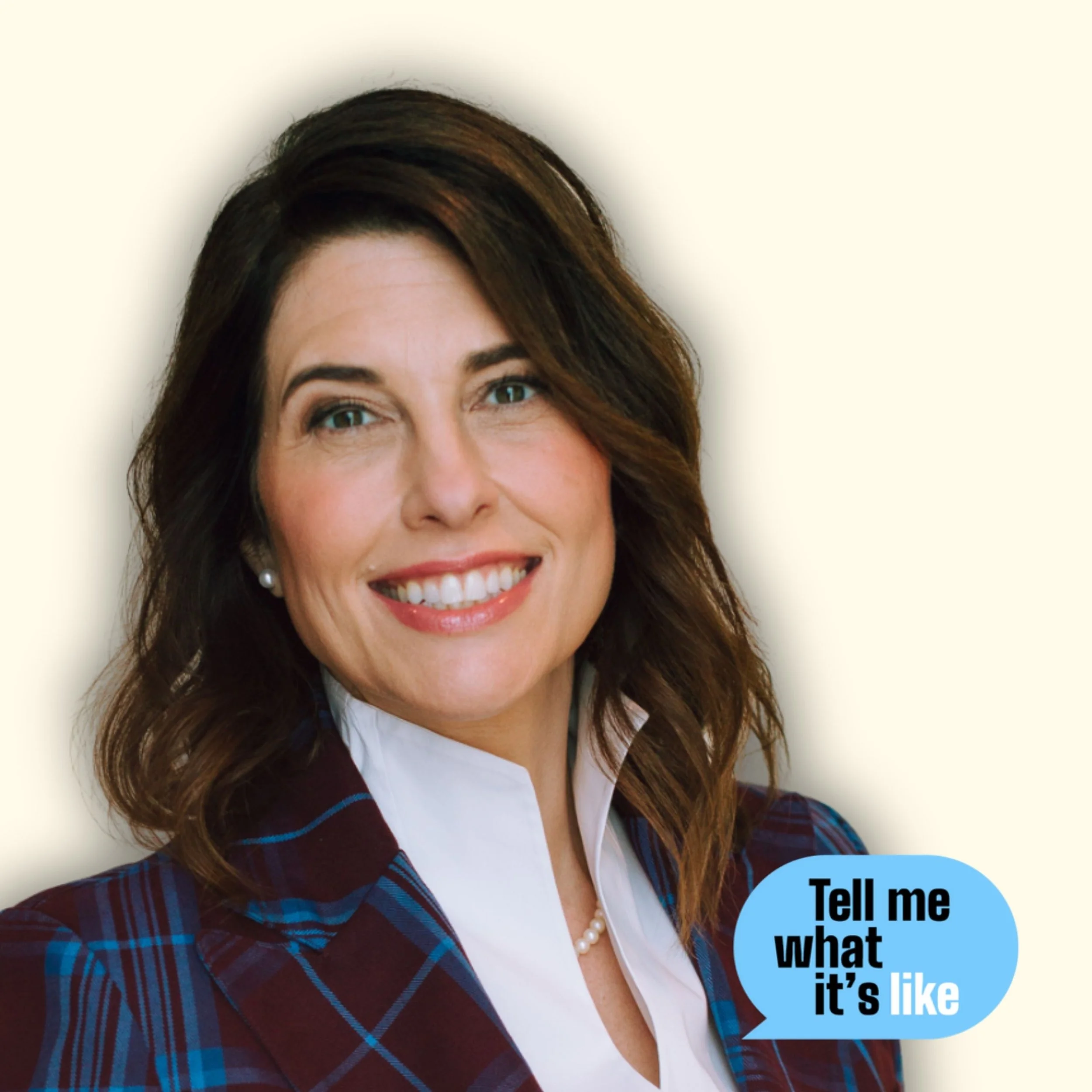
Suzanne Smith has spent her career working with nonprofits and has witnessed a reality many people outside the field don’t see: solving big social problems requires more than passion and good intentions. It requires organizations strong enough to grow and build long-term sustainability.
In this episode, Suzanne shares what it’s like to work in the social impact world, and what she’s learned from working with organizations trying to turn big ideas for change into lasting results and stronger communities.
Hear Suzanne talk about:
Growing up in a family that talked about social issues at the dinner table
Her early career working in lobbying and the nonprofit sector
Why many nonprofits struggle to scale their impact
The intersection of nonprofit, business, and government in creating change
Why she believes social change work is a calling, not just a job
Mentioned in this episode:
Suzanne Smith’s Substack blog, Social Trendspotter
“One of the things I saw was the fact that the issues were scaling, but the organizations were not scaling along with them.”
Episode 30 Notes
Stacy Raine: In 2018, Suzanne Smith got a call from Dallas's leading LGBTQ plus organization. Their organization, called Resource Center, was experiencing increased demand for their services, and they wanted to be ready for what was coming. That's why they called Suzanne as the founder and CEO of Social Impact Architects.
She is well versed in helping nonprofits get ready for growth and prepare for long-term sustainability. Suzanne, welcome to the show.
Suzanne Smith: Thank you so much. I've been looking forward to this conversation for quite a while.
Stacy: Me too, because I love talking about nonprofits. You've got a long history with social change, with nonprofits, and you've helped a lot of groups make important change.
So let's talk about your background.
Background & Early Introduction to Social Issues Awareness
Suzanne: Yes, well, it's not often that I get to actually get interviewed by someone who's actually worked in the nonprofit space too. So I hope we'll have a fantastic conversation that will really spark a whole lot of good thinking on the part of your listeners.
So thank you for having me on. So honestly, it started when I was a kid. I talk about the fact that I was raised by people who were change makers. And so we talked about social issues at the dinner table, literally.
Like we couldn't come to the dinner table without reading the Dallas Morning News and having opinions on different things. And then my parents would all of a sudden say, well, we'll argue the other side. What do you think about this? And so I, of course, thought every child grew up that way.
I then realized that not every child grows up that way. And so I grew up also in a political family that saw change and was part of making change happen.
A “Natural” Career in the Nonprofit Space
My dad actually ran for County Commissioner and so I saw change from a lot of different angles. So people will say they're not surprised. My parents would say they're not surprised that I ended up in this spot.
So from there actually I was a lobbyist and worked in the nonprofit space and was lucky enough to work for two nonprofits myself. So I was knee deep in the work. But one of the things I saw was the fact that the issues were scaling, but the organizations were not scaling along them.
So we have 1.5 million nonprofits across the country and as you see now, the world is chaotic. But yet nonprofits, as I jokingly say, they're running off lemonade stand budgets. They're not scaled at the level to solve these problems.
Intersection Between Government, Nonprofit & Business
Suzanne: And so, and I was working for organizations that actually had more resources.
What I did is I went back to business school and actually went to Duke, studied there and really found the intersection of government, nonprofit and business.
I talk about the fact that I'm trilingual, that I speak all three languages, which is really what you need, to do social change because change happens at that intersection. After business school, I founded Social Impact Architects 16 years ago.
Teaching Undergraduates and Executives About Social Change
Suzanne: I also now am lucky enough to actually teach. I actually teach executives as well as undergrads. I call it the fountain of youth because teaching young people is one of my favorite things to do, but it keeps me young.
I also for the past 13 years, wrote in a weekly blog. So it's a routine I do every week, which is one of the top blogs on Substack on social change called Social Trendspotter. So those are the different areas in which I play. I love social change. It is not a job. It is definitely a calling, as you well know.
Stacy: When you say social change, can you define that for me?
Suzanne: You know, it's interesting. I talk about it from two different levels, you know, so I obviously have chosen a career in social change, and so I call myself a professional change maker. But one of the things I also am trying to inspire is everyday change making.
So to me there are people out there that should be thinking about social change, but they can do it in their jobs. So business executives who should be thinking about how do I run my company and how do I make sure that I'm contributing to the community?
So Fortune 500 companies to small businesses, but there's also individuals out there who need to be change makers. They need to vote. They need to think about at a local level what they can do to make a difference.
It could be cleaning up a local park. It could be fighting City Hall on something that they need. But honestly, this is where I think America has such a great long history of change making. In fact, there was a French philosopher who came to America very early on in our origin story.
And he actually said that we are a nation of joiners, and one of the unique elements of who we are is the fact that Americans will roll up their sleeves, help their neighbor, fight City Hall, fight DC, and they will make a difference in the lives of other people.
And so that's really what I'm trying to inspire, is both the professional changemaker and giving them the frameworks and tools, but also really inspiring everyday changemakers to realize that their voice matters and they need to be part of the community to continue to make a difference in the issues they care most about.
The Origin of Nonprofits & Alexis De Tocqueville Thoughts
Stacy: And I would argue that that's probably what you were doing when you were lobbying at a college, is going to government officials .
Can you talk a little bit about what you did back then, that sort of inspired this whole career?
Suzanne: Yeah. So you know, it's interesting. We were very new in the nonprofit space doing public policy. So I was working at the American Heart Association. One of the things we recognize is that the government could be a force for good.
And we needed to kind of help the government think about the way in which it could actually help the everyday lives of individuals.
So just to kind of create a frame, and this is one of the things I talk about in my class, is nonprofits are a relatively unique thing. If you go to other developing countries, the nonprofit sector doesn't exist. Civil society doesn't exist. There's the government and there's business.
In our very origin story, we didn't have nonprofits either. It actually, if you think about the pioneer days, so if you think “little house on the prairie” timeframe. You had small businesses who were doing things, the blacksmith, the person who owned the general store, and you had limited government.
This is what the French philosopher Tocqueville said, then you had these people who recognized there was a missing middle, that we actually wanted to have a school, we wanted to have churches, we wanted to have a health clinic who would take care of people who maybe needed it.
And those small businesses and the everyday citizens actually contribute to those things happening. That's really where the origin story of nonprofits started.
And 75 years ago, Eisenhower actually codified that and said, OK, we're going to create a 501 C3 so that that way everyday changemaking can really turn into a more professional industry.
And those people who were donating businesses and people like you and I could get that tax deduction and there was a more sophisticated structure. So we're still in the very origin of nonprofits.
Social Change As A Calling, A Personal Choice & Collective Effort
Suzanne: So going back to your question. Government needs guidance. You know, we are the government. I think oftentimes people think it is outside of ourselves, but truly we are the government in a democracy.
And so I was lobbying on behalf of the American Heart Association and it was personal to me. So my goal for working for the Heart Association was I wanted every child to know their grandparents because I wasn't lucky enough to know my grandparents.
They died of heart disease and stroke before I could really get to know them. So part of what I did is work on making sure, I'm not going to wait that this has happened 25 years later, that people get to the hospital on time and they're able to get life-saving drugs like TPA when they get that for a stroke and you get to live longer as a result.
And so that's why the lifespans of Americans have actually extended enough where people get to know their grandparents and my parents are still alive because of all these wonderful change makers out there.
The doctors, the EMS, the 911 operators, all the people who come together to create a system to make sure that we extend the life of people. So that's really what we lobbied for is everything from 911 to making sure EMS had access to TPA. was a million different things that created a system that has now extended the lifespan of so many, a whole generation of Americans.
To this day, I think one of the amazing things about the United States is the fact that we have all these people, everyday change makers and professional change makers who come together, lobby the government and say, this is something we want to do. And then those changes happen and everybody's lives have changed as a result.
Stacy: I love that you called the 911 and EMS workers changemakers. That's just what it is, you know, when you're talking about nonprofits, you're talking about changemakers. You're thinking about people inside nonprofits.
But the system is so much bigger than just the one group doing it. It's also the donors. It's the people that are helping make it happen. It is grants. It's all of these pieces that go into it.
Suzanne: Absolutely.
Stacy: And so you launch your business, your consulting business, and you start working with them on a project, you said that was 15 years ago.
Complexity of Nonprofits Ecosystem
Suzanne: Yeah, and it's interesting because I was resistant to being a consultant because I think consultants kind of have a bad name in the nonprofit industry and you probably remember this like a consultant is going to come in and tell us magically what we should do.
And I had dealt with too many consulting firms when I was at Phoenix House of the American Art Association and I had a love-hate relationship with them in many ways because they oftentimes would give us these grandiose plans that didn't actually match the budget that we actually had.
Because part of the nonprofit, I think, dynamic, which I'm hoping to change with my work is that we oftentimes are doing it, like I said, on lemonade stand budgets, you know, so how do you create seismic social change when you barely have the system you need internally to do those things?
And so that's one of the things I've been championing with a lot of the work that I've done, both my research as well as the blog, as well as the consulting work.
So I had a love-hate relationship, but what I tried to do is really think about what kind of consultant would I have liked and instead of having someone come down from high with a bunch of frameworks and a bunch of like jargon things and charging me a huge amount of money, I created social impact architects giving everybody access, know, so we're sliding scale. We're a benefit corporation, which means at the end of every year we break even.
So for the small nonprofits, they either are pro bono or low bono. And then the large nonprofits or the large foundations or the high net worth individuals, they pay more. And that's our business proposition.
And we don't work with you based on a project. We work until the work is done. And so sometimes that means I lose money on projects, but I don't leave until I feel like the work is done.
Stacy: Wow.
Suzanne: And so I think that really was very important. And it also means I don't give you a strategic plan. I don't give you a feasibility study. We co-create it together. So when I leave, it's as much of their plan as anything else. And we don't brand anything we do.
So you will never find, you know, “created by social impact architects” on anything because it's their plan. It's not my plan because if it's my plan, when I leave, it goes on the shelf somewhere and it rarely gets implemented.
So that's partly our proposition to nonprofits - is we're coming in as a guide. So think about if you were to scale Mount Everest, you're the one that scales Mount Everest. You're the one that takes the credit. But I'm the Sherpa that’s scaled Mount Everest many, many times and gives you all the tips and tricks so that you do it successfully.
Stacy: That's exactly what I was thinking; consultants, sometimes can get a bad rep. But also, when you work with a lot of different organizations, you start to see some of the things that kind of happen over and over again.
That's true in business. That's true in nonprofits. That's true probably everywhere, which I think is part of what organizations like social impact architects can bring to the table.
Suzanne: Thank you. Yeah.
The Resource Center in Dallas & Rethinking How Nonprofits Succeed
Stacy: And I'm guessing that's probably what you brought to the table when the Resource Center called you back in 2018. So let's talk about that story a little bit, and as sort of a lens to the nonprofit ecosystem. What was happening with them and why did they call you?
Suzanne: Yeah. So I love Resource Center as an example. They are Dallas's leading LGBTQ community. But for your listeners, there are organizations like Resource Center across the United States.
There is actually an organization called CenterLink that can give you access to who those centers are and the ones that have the best strategies in your community. And so this was in 2018. And so keep in mind that was before we had some of the shifts in people's views about the LGBTQI community that has happened as of late.
But I have to give a lot of credit to the CEO, C.C. Cox. She's a lawyer by trade, so she's deeply analytical. And so she came to me and she basically knew that she needed a growth strategy. And one of the ways that I think nonprofits are different from businesses is businesses, when they look at their strategy, they're oftentimes looking at wide. Like, how do we get bigger?
And as I say to nonprofits, we're not about getting bigger, we're about getting better. And so sometimes getting better means going deep versus wide. And so she really wanted to look underneath the hood of her organization and say, what's working, what's not working, but also really prepare for the future.
What are the needs of the community? And so through that strategic planning effort where we asked the community, what are your needs? We recognize affordable housing, which I know is in the headlines right now, but can you imagine back in 2018 that we had this conversation around we need affordable housing and not just for everybody, but for seniors, because oftentimes the seniors were having to go back in the closet.
Turning Insight Into Action
Suzanne: When they actually went to assisted living centers and so it was an opportunity for them to provide something that really didn't exist. And so when I did the original strategic plan and then we did a feasibility study around what it would look like.
It was really one of the first in the nation and you know, three years ago they actually started Oakland place. It's really a very revolutionary idea. 84 units of affirming senior housing and it's gone amazingly well.
And now they're coupling it with an on-site health clinic. And so all of this was part of the design in 2018. And over time, they built the strategies little by little, bite by bite to try to figure out how to get there.
So I have to really give a lot of credit to the CEO and the executive team, as well as their board. They were all in on trying to figure out what were the things that the community needed. And so as my students will say, where are the receipts?
The receipts are that they doubled their volunteers. HIV testing has gone up by quarter, almost 23%. Insurance assisted clients in their health clinic has increased fivefold with more to come, and in this kind of healthcare environment, it's even more important that people have access to care and access to quality care.
And they're about to launch their on-site health clinic. In fact, their grand opening is coming up in March. And so all of this was stuff that we worked on. And I think I have to give a lot of credit because a lot of this stuff was not easy, but it was the right thing to do. And they did it in a sustainable way, bit by bit, which meant they didn't get overloaded.
And it was strategic choices all along the way to make sure that all the strategy came together to really, again, go deep in the areas where the community needed them the most.
The Missing Framework: Creating Clarity & Sustainable Momentum
Stacy: Right. And so when you think about strengthening nonprofits, that's essentially what you came in to do, but it was also planning for the future. It's a lot of co-creating, as you said.
Did you notice things about this scenario and other scenarios that you have been involved in that kind of seem to be similar across the board when it comes to nonprofit organizations?
Suzanne: Well, and that's why I love that you do this particular podcast because it's like, tell me what it's like. And so now the strategic plan I'm finishing right now for a group in Bermuda will be my 150th strategic plan.
So I have so much, I've seen the pattern and here's the pattern. And then of course, now that I've seen the pattern, I can figure out what the solution is. And so I'd say the big pattern is that we really didn't have a framework.
The biggest framework we had because nonprofits were only 75 years old is act more like business. And unfortunately, nonprofits are not businesses.
Stacy: So you've seen it.
Suzanne: You know, is not how that framework is not an appropriate terminology. I usually reframe that with people, even though I'm an MBA and I love business.
We need to use business principles and many of the frameworks in business have to be properly translated for the nonprofit space. And so one that I properly translated is called the flywheel effect. And so some of you may be familiar with that because it was in a book by Jim Collins Good to Great.
And what he did is he looked at all the highest performing corporations and said, what do they have alike? And so this flywheel is this idea that you kind of create success, create success for people who don't remember their physics class from high school is thinking about when you were a kid on a bicycle.
And there was this lovely moment when you actually knew how to actually ride that bicycle and you were riding it with just the most intent and all of a sudden you take your feet off the pedals and the bicycle continues to move forward through its own momentum.
Like you don't have to work so hard. And so that's really what Jim Collins was talking about in a business context is how do you create a flywheel where the momentum takes on? And so that's what I tell people is I give you a strategic plan or a strategy, but what I'm really giving you is clarity and momentum.
And so the flywheel that we reconstructed based on Jim's amazing strategy and translated for the nonprofit space is this idea of first, the thing that nonprofits need to pay most attention to in the for-profit space.
We look at the bottom line. Our bottom line is impact. At the end of the day, we need to create impact. Then it has to be a data driven impact. We live in a place where in God we trust all other people need to bring data. And so nonprofits have to be data driven.
And so we have to create impact and donors are looking for it. Employees are looking for it. You know, let's create impact. So that's the first part of the flywheel. That's the product and service that we're creating for the community. And then from there, we actually then move to brand.
And so as a Texan, I call impact the steak, brand is the sizzle. Like you need the steak and the sizzle. And so we moved to a place and I think social media has just accelerated this where you can't just do good work and hope people are going to pay attention.
Like you have to tell them you're doing the good work and you have to invite them to be part of the story so that they want to be a donor. They want to be a volunteer and ultimately maybe even an employee like I wanted to for the Heart Association.
So the flywheel is impact and then brand. And what Jim proved and I've proven in my research as well over the last 15 years is if you deliver impact and you deliver brand, and the revenue will take care of itself, that people will donate, people will contribute because they see you've got the receipts, and they know about the work that you're doing.
And then when you're able to raise the money, operations is the next part of the wheel. You can then plow that money into operations so that you can have the best IT, you can have the best employees and pay them a fair wage. You can have the right systems and that's the reinforcing loop.
Then all of that gets plowed into more impact, which is what CC did in the example with Resource Center. And that's why they've grown. So they've gone from a $10 million organization in 2018 to now a $26 million organization.
So they grew because they actually invested in themselves and they invested in their infrastructure and they responded to community needs and they told a great story. So people like myself would donate and so of course nestled in the middle is governance.
You’ve got to have a great board. You’ve got to have people who are willing to champion your cause. And then of course a good culture, you know, in a culture that really embraces entrepreneurship, innovation, accountability, and all of those things.
And so we've developed this flywheel model that really helps people not focus on one thing, but focuses on all things so they truly can get that momentum.
And that's really what a strategic plan is all about. Is looking at each of those component parts and working on them individually, but then recognizing it's a collective whole as well.
Strategic Planning & Partnership
Stacy: You've mentioned your research a couple of times, and I'm curious to know where that is happening. Is it happening sort of in real time with the different organizations you're working with, or is it happening sort of academically? What does that look like for you?
Suzanne: Both ends. And so I have partnered with nonprofits as I said once a client always a client and so you know I get the details from CC of like where they were before where they are after and candidly my first 10 strategic plans weren't great.
In fact, I recently went back and looked at them and I realized they were missing a whole lot of things. And so some of this is me, that repetition that I have built over time where I recognized what's the difference between an operating plan versus a strategic plan and what really creates the lift for an organization that they need.
We also now have paired strategic planning with capacity building and change management strategies. And so that was our big innovation eight years ago, is we now couple every strategic plan with a change management plan and making sure that they have the levers they need in order to make sure that change actually happens and is sustained without us being involved.
Because keep in mind, I walk away and they're the ones that continue the work because we've co-created it. So I've done it in partnership with my clients. They know that I'm doing this not because I want to be a consultant, but because I want to create social change alongside them.
And that's my calling. The other thing I also have gotten some great assistance from the universities that I work with and then many of the community organizations. The foundations, organizations like Taka. We have actually done the research around arts organizations and taken them through the flywheel and seen their growth over time.
So we actually just did a cohort, our third cohort. We've now gone back to a year one cohort with arts organizations that are small. So many people may look at Resource Center and go, well, they're really large, so it's easy for them. These were micro organizations, micro nonprofits.
We put them through the flywheel, and each one of them have seen anywhere from 30 to 50 percent growth in that two-year period because of the work we did with them in both the flywheel as well as creating a strategic plan, as well as creating a more compelling value proposition in their donor relations.
I do a lot of different research. I'm really careful because I think doing this research is really important to make sure people know what really works and what really doesn't work. And so my clients are partners in that research.
The Nonprofit Dilemma
Stacy: Right. One thing you mentioned that I think is super important is sort of the internal cultural change. And I think that happens inside nonprofits. But I also think it happens across the country in terms of when people think about nonprofits.
You mentioned making sure that you can invest in things like operations and marketing. I've heard so many times, you know, 98 cents on the dollar goes to, you know, our programs and it's like, well, you do have to actually pay someone so that they can work because they also need to eat and they need to pay their rent and they need to do all of these things that normal everyday American has to do to, you know, live life.
Is that something that you sort of battle internally in nonprofits as well as externally with board members or whomever it may be?
Suzanne: This is why I love talking with you because you know kind of the nonprofit dilemma. I do think because we're still a young industry, you know, 75 years ago, a lot of the people who are working in nonprofit were volunteering.
So what I remind people of is the American lifestyle allowed for that because you really only needed one person to be the breadwinner. A lot of women were many times the people who started these nonprofits.
So think Clara Barton and the American Red Cross or, you know, and I've given countless examples, I call them the founding mothers in many ways of these nonprofits who really changed the course of our history, that have made a difference in lots of different issue areas, including mothers against drug driving and all of these people who've made a huge difference.
But now we live in a society where you have to have a two income household.
Stacy: I love that.
Heartbreaking Statistics in the Nonprofits Space
Suzanne: And so one of the things I'm trying to combat is there's a really heartbreaking statistic that almost 25 % of nonprofit employees are not making a living wage. They're having to seek food stamps and social services. And that just breaks my heart.
We can't continue to run our systems, these systems that need to be well operating on the backs and the sacrifice of people.
And so one of the things I did is a call to action to my brothers and sisters in the nonprofit space. We need to do a better job of that. And so in many of the strategic plans I've been doing over the last five years quietly is I've really gold a number of hospitals and a number of groups saying:
“How do we get over time, everybody in your organization making a living wage?”
“How do we make sure that they're getting their healthcare?”
So I have an arts group very recently who is a dance company who decided at their gala that they were going to provide health insurance for all dancers.
So when I tell that story to people, they're like, well, why wouldn't you provide health insurance for dancers? Of all people, dancers need health insurance. They need to make sure that they're going to a chiropractor and all the things that they do to contort their bodies.
Of course they need health care. And so I think I just tell the everyday American, look, here's the thing. If we want to have, you know, a thriving country where we have quality of life because we have amazing arts organizations that are doing their part, we have a strong social safety net, we need to make sure that we have a profession that is well-funded and paid.
And I can tell them, I will vouch for the nonprofit space. You will too, that all of these people are hardworking people. And all of these things that you hear about what nonprofits are doing or not doing, they're the anomaly.
They're not the everyday nonprofit and how hard nonprofit people work. They're the first in and last out. You go into any crisis situation, whether it's very recently with the government shutdown and they were, you know, the first people in trying to figure out how they were going to increase food bank usage for federal employees and other people who are relying on food banks.
And they're usually the last out in any crisis. And they're still dealing with the ramifications of that. Or if you think about, you know, weather crisis, they're the first ones in after a tornado or after flooding, and they're still trying to recover even when the headlines go away.
And so these nonprofit people deserve our respect. They deserve to be paid appropriately, and there's no fluff in nonprofits' budgets. That just doesn't exist.
The Myth Buster for Nonprofits
Suzanne: And so if you want strong systems that build quality of life and a strong social safety net, we have to fund it. The other thing I remind everyday Americans is we're all one crisis away from needing that social safety net.
You're one car accident, you're one loss of a job, you know, and some of us have families who could support us, but others need a social safety net to help us that one time.
When something happens, that's the unexpected and we need to kind of level up and we need to have people to support us, whether it's a therapist, whether it's a food bank, whether it's a workforce retraining program.
And with AI, I think this is going to happen in a quicker clip because there's going to be more and more people who are on unsteady ground. And we need that social safety net to be strong. And right now it's very weak and it's in part because we're underfunding it.
So I think this is why I'm making it my calling in the next 15 years to really help reframe how people think about the nonprofit space and really be the myth buster around a lot of these really unfortunate narratives that make it difficult for us to have that strong safety net.
Stacy: Yeah, it's also a competitiveness thing in terms of, I think Dan Pilato was the one that talked a lot about, you can either be the person who's running a nonprofit and not making enough money to live on, or, you know, with your MBA that you spent thousands upon thousands of dollars on, you can go and work somewhere else and be on that board, you know?
So how do you incentivize people to put their talents and expertise into all the places we need it, not just in business, but in nonprofits.
Social Change As A Business’s Competitive Advantage
Suzanne: Well, and I love that you mentioned that because that's why I equally focus on everyday changemakers because business wants to be a force for good too. Now over 90 % of Fortune 500 CEOs have a CSR report, a corporate social responsibility report.
More and more small businesses are recognizing that you and I want to actually frequent businesses that actually create social change or are part of social change.
And so it's not only the right thing to do anymore, it makes business sense. It's a competitive advantage for them to be part of a conversation around social change. And so I equally spend time with corporations and just small business owners to help them think about how do you not only make money, but how do you also make a difference?
And sometimes that's partnering with a nonprofit, but sometimes that's really just thinking about how much are you paying your employees? What could you be giving back to the community? What asset do you have that could be supportive of community change?
And so I always highlight organizations, companies like Toyota, who they're the first group that goes into food banks and helps them make them more efficient. And who's better at efficiency than Toyota?
Stacy: That's cool.
Suzanne: I have a small business that I worked with that was a franchise owner of a bunch of oil change places and they adopt a local after school program and they actually give money to that after school program.
But they also teach auto mechanics, and some of the people who came through that after school program are working and have summer jobs at that location. And so it's these small acts of change that are really what's part of the fabric of who we are as Americans.
Various Ways to Become Changemakers
Suzanne: I just want to inspire people to do more and realize any little bit they can do makes a big difference in the lives of other people.
Stacy: I love these examples of people who maybe aren't working in a nonprofit because they're a car mechanic, but they still can participate in making our communities better places and making more opportunities for everybody.
Suzanne: Well, I call it the four T's framework and for you to really think about what T is best for you, is time, you know, so you could give your time. So the number one way I encourage people to give their time is to be a mentor.
Right now, big brothers, big sisters need male mentors in particular. I became a big at 18 and it was probably one of the most transformative things I've done in my life. And certainly I've gotten as much out of it, if not more than I actually gave.
Being on a nonprofit board, you mentioned that that actually helps on a lot of levels. You know, it helps even improve your resume. It actually builds leadership skills. So that's time talent.
Maybe your talent is, you know, helping with websites or maybe your talent like with Toyota is efficiency like so leveraging your talent, your God given gift and actually helping a nonprofit with that. And then treasure. Of course, we want people to donate.
You know that donation makes a big difference. I encourage people to just forgo one Starbucks every week and decide you know I'm in on a regular basis. Give back to organizations that I've been impacted by. So maybe it's that mentorship organization. Maybe it's a health care charity for a disease that you feel like you want to do something about. And then of course testimony and we live in the social media age. So your voice really matters and so testimony about issues that matter to you.
So I encourage people to do less doom scrolling and more hope scrolling. Like talk about things that we can actually make a difference in. And it really makes a big difference for you to go on social media and talk about here's an issue that I care about and here's how we should fight City Hall to make this happen.
Or, you know, get a speed bump because people are running through your road too fast. I mean, that small stuff actually makes a big difference.
Channel Frustration into Positive Change
Stacy: You are such a positive person, but you are working so, you spent your life, your career working in places where there's a lot of need.
Do you ever, I guess, how do you stay so positive and do you ever get frustrated?
Suzanne: Hahaha. Well, it's such a great question. I definitely get frustrated.
I think I get frustrated at the pace of change, which is why I went to business school. And I really have to thank Duke for kind of giving me the power tools because I was frustrated with the secondhand hammering tools that I was able to get. And I actually really felt like I got power tools and that's why I'm passing those power tools along to people.
You know, so I think I channel my frustration into positive change. And so again, I got that from my parents, you know, my mom was a counselor. My dad was a football coach, so they only gave me like one day to if something bad happened to me at school, they were like, OK, you can feel your feelings. But then my dad the next day would say, now, what are you going to do differently tomorrow?
You know the only person you're competing with is the person you were yesterday. So what are you going to do differently? And so just think again, I got that wisdom from that dinner table and they were coaching and so yeah, I definitely have frustrating days and I go do all of my selfcare things to kind of feel the feelings and then the next day I wake up and I'm like, OK, what am I now going to do about it?
And sometimes I find friends, you know, so it can be a lonely business, as you know, and so I've got a lot of friends that I'll call and, you know, we do it together.
Advice for Nonprofits
Stacy: Right. So you said you've done 150, I think, strategic plans. So you've worked with a lot of organizations. You were very good at channeling your frustration from everything you've seen from, you know, all the businesses and nonprofits out there.
What's your advice to them? What do you say? If you really want to make change, if you want to grow and be able to increase your impact as you say, what is it that you tell them?
Suzanne: So I think one of the hard parts about nonprofit to your point is the need is so large. And so one of the hard parts about being in the nonprofit space and arguably I also deal with this too, is a scattershot approach.
You know, I have so many ideas. One of the reasons why I teach entrepreneurship is because every entrepreneur has lots of ideas. But part of what you learn as an entrepreneur and I hope I teach my students this discipline is then where to focus and where to focus is strategy.
And strategy is equally important in a strategic plan. But I also tell my students the most strategic decision you're going to make every single day is how you spend your time and who you spend your time with.
And so to me, I think the biggest piece of advice I will tell people is move away from this kind of sacrifice mentality where everything is scattershot, every need, you're moving in like a superhero trying to solve for every need.
And as you know, you do that at a mediocre level and choose to be strategic, like figure out the things that you're best equipped with, where there's the most market opportunity where you can get the greatest impact, and channel your efforts.
And that's what strategy is all about; is channeling your efforts. And that's where excellence comes from, is that level of strategic thinking.
Stacy: Yeah, and strategy is really, like you said, it's just thinking about the things that really have to get done and you know, knowing what you want to do and creating a plan to do it. Would you say that's pretty accurate?
Suzanne: Yeah, absolutely. And I think that it's just an easy trap for people who are do-gooders to fall into. Is there so much need? How do you say yes and no to certain people?
But I keep reminding people that the first person you need to be saying yes to is yourself. You need to be really thinking about self-care and where you choose to sacrifice.
But also saying no means you're saying yes to other things and doing those things with integrity and with excellence. And that's really what people deserve.
That's what people in need deserve is excellence or, you know, we deserve, you know, art productions that are excellent.
We deserve social safety net that is excellent. You know, we deserve all of that. And so that's what I would say. Starting with a strategic mindset is the best advice I give people.
A Book In the Works
Stacy: And you have a new book coming out where people can get some of that information and resource help. Can you give us a little bit as we close? Talk about that.
Suzanne: Yeah, well, I appreciate you asking about that. So I didn't plan to be an author, but this just like everything, it comes from my clients.
I wrote a weekly blog and I've been doing it for 13 years and so not everybody has joined me 13 years ago. They've been along the journey and I've recently gone on sub stack and so people will say where's the blog on this? Where is the blog on that?
I'm like, I wrote it seven years ago. So someone said to me actually, and my mother actually endorsed this too. She's like you need to write this book and just put all your blogs together.
And so that's what I've done. It's kind of a compilation of different blogs at different times. They've all been updated to 2025 standards, so they're kind of in the latest context of AI and all sorts of things.
And so we're going to be putting that out free of charge. It's going to be a digital download, and you're also going to be able to, if you're like me and want a hard copy, and my mom, of course, is going to get an autograph hard copy too, because it was partially her idea.
We'll also be finding ways for you to do that through Amazon and other kind of publishers where you can get a printed version that is at cost.
Stacy: That's awesome. I think it's going to be a super important resource and benefit for people who are working to make change. So Suzanne, thank you so much for joining me to talk about all of your work and how to strengthen nonprofits.
Suzanne: Well, thank you for bringing this to the forefront because I think it's such an important element and I would just encourage people if they're interested to go to the website socialimpactarchitects.com and to really, you know, not be a bystander
In the world of social change to just choose one thing that you're deeply passionate about and just decide to do something differently about it. You know, use your voice, use your money, use your time, use your talent. One of those four, I promise you, you will feel a difference in your life and you'll be making countless differences in the lives of other people.
Continue the Conversation
Listen & Follow Tell Me What It’s Like
Follow the show so you don’t miss future conversations about uncommon experiences and the perspectives they’ve shaped.
Know someone who would enjoy this story?
Send them this episode.