

Finding her Birth Mother at 51: Julie Melanson on Adoption and Identity
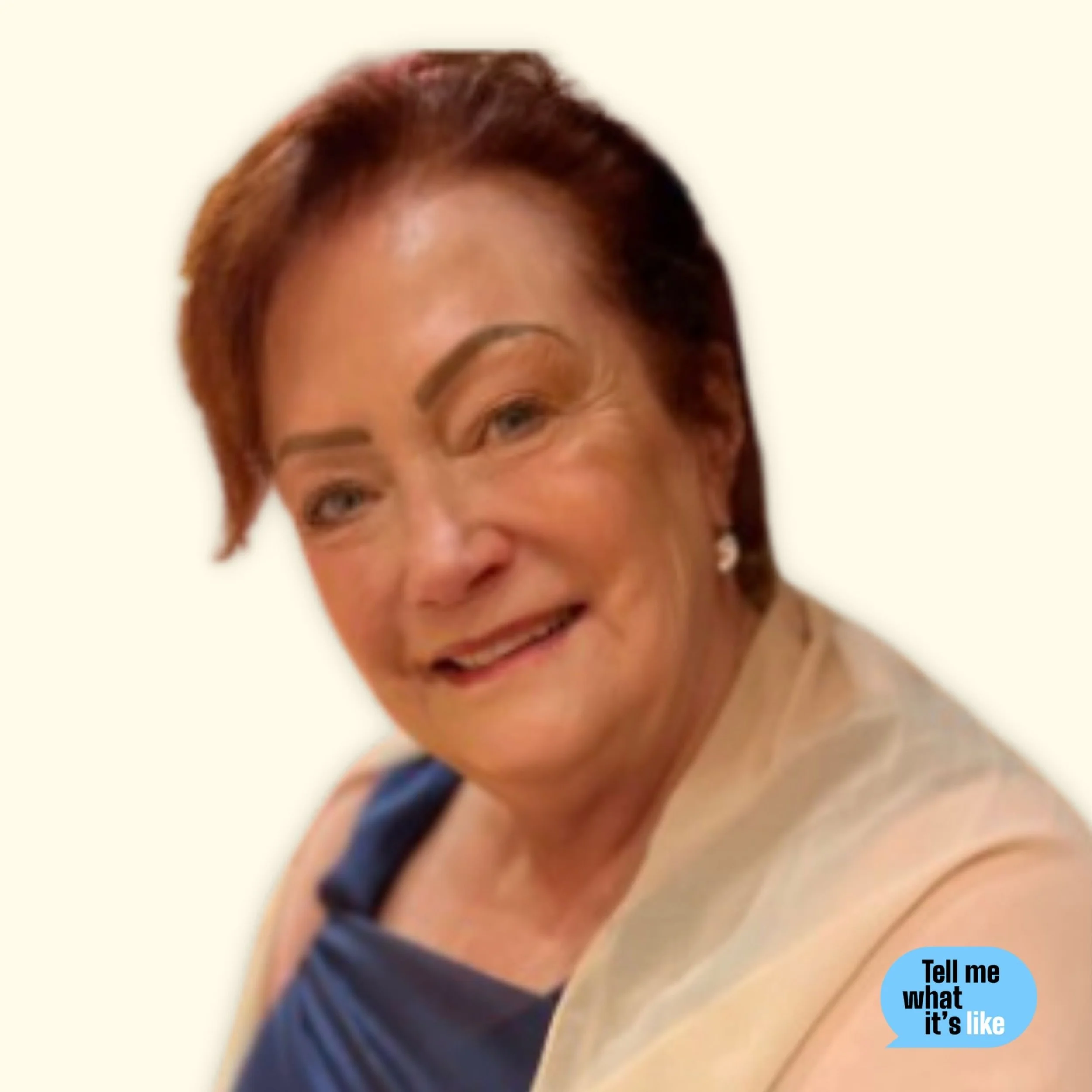
Julie Melanson always knew she was adopted, but it wasn’t until she was 51 years old that she decided to search for her birth mother. She eventually found her, built a connection with both her mother and her birth siblings, and then lost her mother soon after. Julie reflects on what it was like to grow up as an adoptee, search for her mom, meet her for the first time, and get to know her during the time they had together.
Hear Julie talk about:
Growing up in a large extended family with 17 cousins and summers at the family lake house
What her adoptive mother used to say about her birth mother
Why she waited until 51 to begin searching for her birth family
What it felt like to finally find and meet her birth mother
Discovering similarities between herself and her biological relatives
The complicated emotions of finding — and later losing — her birth mother
Mentioned in this episode:
Julie’s memoir, Not Yours To Keep, about adoption and her birth mother’s strength
“The Prayer” by Josh Groban and Charlotte Church
“And she said, ‘I am your mother and I have been looking for you for the last five years.’”
Episode 38: Julie Melanson Interview: Finding a Birth Mother After 51 Years
Stacy Raine: This is Tell Me What It's Like, a show about uncommon experiences and what they reveal about the world. I'm Stacy Raine.
Julie Melanson always knew that she was adopted. She grew up with extremely loving parents and had a very happy childhood.
Fast forward 51 years to the day she decided to do some internet searching about her background, leading her to find her birth mother. It turns out their lives had nearly intersected so often over the decades. Julie, welcome to the show.
Julia Melanson: Stacey, thank you so much for having me. This is great.
Growing Up as an Adoptee: Julie’s Early Life
Stacy Raine: I'm so glad that you are here. I would love to start by talking about your childhood. You said you had a very happy childhood and you knew you were adopted. Let's begin right there.
Julia Melanson: I did have a very happy childhood. My mother, who had adopted me, had lost a baby actually seven years prior to adopting me, and she could not conceive.
So they adopted me, and then about a year later, she got pregnant with my brother. We grew up in a very nice middle-class neighborhood. We had a very wonderful extended family.
I grew up with 17 cousins on my mother's side and many on my dad's side as well. I went to private Catholic school my whole life. It was a childhood that was filled with love, family, and wonderful memories.
My grandfather actually built a cottage on Lake Huron in 1938 and we would spend summers up there all together. There would be 17 of us for the most part. My mom's sister had 11 children.
We were always closer to the people that we were closer in age to. We all hung out together and we just had such a great time and so many memories on that property. To this day, when we think about our childhood and talk about it, we feel we were so lucky to have that.
The Strength of a Birth Mother
Julia Melanson: I always grew up knowing that I was adopted. My mom, from the time I can remember, would always say, "Your mother must have loved you so much because it had to be so hard for her to give you up for adoption".
There was never any big surprise. It was a really, really great way as an adoptee to grow up.
Stacy Raine: What you just said about how your mom talked about your birth mother gave me chills. What a wonderful way to illustrate the sacrifice that your birth mom made for you.
Julia Melanson: She did. I didn't realize until I found her what a sacrifice it was and how hard it was. I was born in 1956, so it was a completely different society than where we were 15 years ago or more when I found her.
She withstood the pressure of her mother, who really wanted her to abort me. She decided not to do that and stuck to her guns. That relationship was a little challenging for her. She was a pretty strong-willed individual to make that decision in 1956.
Memories at the Lake Huron Cottage
Stacy Raine: I definitely want to talk more about her and finding her, but I'm still so interested in these 17 cousins you had playing in a lake house. It sounds like an ideal childhood.
Julia Melanson: It was wonderful. We had this cottage, which really was not very big. When I think about it now, it was only about 800 square feet.
There was a bathroom and an outhouse. My grandfather had finished off the top level of the garage as a big bedroom. Because my mom had the smaller family, we got to sleep in the cottage.
Sometimes I'd sleep with a cousin, which was nice because there was a bathroom right there. My aunt that had 11 kids would walk up at night. They tell a story about how she would go up under the moon and sing "Me and My Shadow," and they would dance on the way to their sleeping area.
My uncle and aunt who had five children would rent a small place behind us. My mom's brother would sometimes lock all the doors to the cottage during dinner so no one could go in. He would say, "No, we're having dinner now. You all stay out there".
I don't think any parent would do that nowadays. It's a whole different approach to parenting. We were a little horrified at the time, but we all survived.
Early Curiosity and Finding Adoption Papers
Stacy Raine: Out of all the 17 cousins, were you the only one that was adopted?
Julia Melanson: Yes, I was.
Stacy Raine: Did you ever think about that growing up?
Julia Melanson: Not so much until I got to high school in my teen years. Then I became curious. I knew that I didn't look like anybody.
I knew I was adopted, but I wasn't treated any differently. My grandfather, who passed when I was 11, treated me very specially because I was his granddaughter who came into the family after they had lost a daughter.
At that point, I knew where important papers were kept and decided to see what I could find out. I found my birth certificate and my adoption papers.
I knew my birth name was Kim Marie Sparbeck. Back then there was no internet, so I resorted to the white pages to look for people. Then I kind of got over it for a while.
Navigating the Medical History Gap for Adoptees
Julia Melanson: The thing that has always been a challenge throughout my life is when you have medical issues. There is always that questionnaire about your background and you have to say "not applicable".
Stacy Raine: Yeah. “What's your medical history? Do your parents have this or that or the other?” How would you know?
Julia Melanson: How do you navigate that?
Stacy Raine: I would imagine when you're filling out that paperwork and you have a weird symptom, and they ask if your parents have it, you have to say you have no idea. That makes the situation a little worse.
Julia Melanson: It’s true. I went through unneeded testing on certain things just for them to be able to rule things out. That part always bothered me.
When I finally did find my birth mother, Diana, I think she was a little surprised that was one of my driving factors. For her, it was obviously extremely emotional.
Diana’s Story: The Birth, the Orphanage, and Resilience
Julia Melanson: She talked about my birth and said she went into the hospital and gave birth. Back then, they would whisk the baby away and you would not even see your baby.
Well, she had a fight with a nurse, went down into the nursery, and held and rocked me for about an hour.
Stacy Raine: As a mom, it makes me tear up just thinking about the decision she had to make. There is nothing like seeing your baby, rocking your baby, and meeting your baby for the first time. To know that... it makes me cry just thinking about it.
Julia Melanson: She didn't have a great childhood. She had an older brother and a sister 14 years younger who had Down syndrome.
The parents were not always happily married. They would take the kids and drop them off at different places. Her brother would go to the grandparents, her sister would go to an aunt, and she would go to an orphanage in Michigan called the Sarah Fisher home.
She told me she loved the nuns and wanted to stay with them. She did not want to leave the orphanage because it was a real constant for her. She was so great at making beds that they would have her teach the new children how to keep things in order.
Stacy Raine: Why was she at the orphanage?
Julia Melanson: Her parents would split up and then drop them off at different places, not even together. Her childhood was very bizarre.
Her relationship with her mother was very stressed over many years. Her mother wasn't there for her in ways most parents would be. Diana talked about how she was working toward forgiveness for her mother for a long time.
Addressing the Stigma of Adoption
Stacy Raine: I want to back up a bit and talk about your beautiful childhood. Your mom was very open and loving about describing that decision to you, and how grateful she was to raise you. When did you start to understand the concept of being adopted?
Julia Melanson: I think it had to be around 10. I was open about the fact. If somebody asked where my grandparents came from, I would say I didn't really know because I was adopted.
Even today, I’ve had someone say, "I'm so sorry," and you have to tell them they don't have to be sorry because I have a wonderful family. There was always a stigma about adoption—that the birth mother probably didn't want you.
I never wrapped my brain around that because my mom had always said how much she loved me and how hard it had to be for her.
Stacy Raine: We can't know every situation, but I would imagine most of the time these mothers desperately love their babies. As moms ourselves, we can imagine the agony.
Julia Melanson: I think so too. I can't imagine her withstanding the pressure from her parents to abort me. It’s not like it was a beautiful love story; she was raped.
She did know the person—it was a cousin of a friend—but it wasn't a beautiful conception. I think what drove her was wanting to give someone a chance at life. By giving me up, as hard as that was, she eventually concluded it was absolutely the right thing to do.
A Special Connection with Her Mom
Stacy Raine: I love the way your mom would talk about her to you. What a gift she gave you.
Julia Melanson: My mom was one of my best friends throughout my life. As I got older and thought about searching, I thought it wasn't worth putting her through that because it would have been very hard for her.
In her mind, I was her daughter the moment they handed me to her. She said to me, "When they handed you to me, you were mine".
Stacy Raine: She felt this instant connection and knew you were hers.
Julia Melanson: At night, we would always say our prayers because they were very good Catholics. We would say good night to Jesus, Mary, and our guardian angels, and then "Good night, little Tracy".
Tracy was my sister who passed away seven years before I was adopted. I thought it was beautiful that she was included in our life in that way.
Stacy Raine: Your mom must have been a superb woman. She sounds like a beautiful soul. Did you feel your birth mother's love growing up because of the way your mom talked about her?
Julia Melanson: I felt like it had to be a really hard thing for her. The story I had come to believe was that my father was a professor and my mother was a student, so I thought of it as unrequited love.
I was fine. I was always so grateful for the life I had. I had so much respect for my parents and our extended family. They were all very connected.
My dad and my uncle were neighbors from the time they were two years old. My aunt, who married my mom's brother, was my mother's roommate in college. There were many years of history there.
The Search for Her Birth Mother Begins at 51
Stacy Raine: Eventually, you decide you're not going to look for your mom when you're young, but at 51, you do. What changed?
Julia Melanson: A few things changed. I had remarried when I was about 40 and had a very happy life. I had moved to Massachusetts, my children were in college, and my husband had three children.
If my mother were still alive, I probably never would have moved or done that because I don't know if I could have left her. My dad ended up getting remarried, which made it a little bit easier.
My husband and I were watching the news one night and they talked about looking on the internet and all the things you could find out about each other. We decided in the morning that we would start to look.
I thought I might as well look since I knew my birth name. We searched and found a lot of Sparbecks in Michigan. We found a woman named Joanne that we thought might be the one because the age seemed right.
I decided later in the day to leave a very non-confrontational message and see what happened. I knew full well that one of three things could happen: it wasn't my mother, it was my mother but she wanted nothing to do with me, or it was my mother and she wanted a relationship.
Leaving the First Voicemail
Stacy Raine: Were you okay with all three options?
Julia Melanson: I think I was because I had spent time thinking about it. When I got a voicemail, I just said I was looking for Joanne Sparbeck to get some health information for my family.
I said my intent was not to cause any issues, just to get information, and asked if they could call back. I waited four days, and finally her son called back.
He realized what I was looking for and told me his mother had married into the family, so she couldn't be my mother. But he put me in contact with an uncle who had all the family history.
The uncle, Jerry, was my birth mother’s cousin. He asked me to send a picture, and then he sent me a picture of a woman named Gertrude, who would have been my grandmother. He said he thought there might be a connection.
He sent me a family tree. My husband and I printed it out on four pieces of paper and taped them together. We finally landed on one person: Diana Healy.
"I Am Your Mother": The Life-Changing Phone Call
Stacy Raine: Why did you think it was her?
Julia Melanson: Because of her age. He said he thought I could be right and mentioned there was a year in high school when she went away to a convent.
He asked me to wait a while before I reached out, so I waited about a month. He was nervous that she was going to be angry that he had passed on this information.
When I finally called, I said, "My name is Julie Melanson. I think I may be related to your family.” She asked how, and I said, "I think I am the granddaughter of Gertrude Sparbeck.”
There was a pause, and then she said, "I am your mother, and I have been looking for you for the last five years."
Stacy Raine: You called and she answered. What did your heart do?
Julia Melanson: I just thought, I can't believe I'm having this conversation. She got all excited and said I had three brothers, a sister, and eight nieces and nephews.
To hear someone say they have been searching for you was amazing. We talked for about an hour and exchanged pictures. I was amazed at the resemblance; I could be her twin. I never grew up with anyone looking like me, so that was exciting.
Intersecting Paths in Rochester and the Church
Julia Melanson: We talked about where we lived. I grew up in a one-square-mile city, and she was right in the next town over. Then I found out that we belonged to the same church.
Stacy Raine: Wow. Do you think you had seen her?
Julia Melanson: There had to be a time. She said wherever she would go, her eyes would always be looking, thinking, "Does she look like me?".
Stacy Raine: You must have passed her. Did you tell her about your happy childhood in that first call?
Julia Melanson: Yes. I told her I had great adoptive parents, a brother, and a very happy childhood. After about an hour, we exchanged information and set up another time to talk.
At that time, my career was crazy and I was traveling all over the world for work. When I was home, she would call and we would talk for hours.
Finally, I had to say, "I just got home, I need a little bit of time to settle back in." She was always so respectful of how I felt and what I was going through.
When I learned about her spirituality and how much she prayed for this, I realized things do happen through the power of prayer. There was no specific reason why I picked up the phone that day.
The Meeting in Rochester: A Reunion After 51 Years
Julia Melanson: We had eight months together, which was wonderful. After about a month of talking, my husband and I flew to Michigan to meet her.
Before that, I told my dad about it. He was great and very supportive. I told my children, my brother, and my sister-in-law. My brother had a bit of a hard time with it because it had always been just the two of us.
Stacy Raine: What was that first moment like when you laid eyes on her?
Julia Melanson: My husband and I were waiting in the lobby of a beautiful hotel in Rochester, Michigan. I was getting kind of nervous.
Then I saw a car pull up. She walked in wearing a full-length mink coat, she had blonde hair, and she was just such a strong personality. We hugged and hugged. It was exciting. I get chills thinking about it.
My husband was stunned at how much we looked alike, especially our mannerisms. He said, "You tilt your head the same way, you do this the same way." We had a beautiful brunch.
I remember telling her, "Thank you for giving me life." I gave her a CD of Josh Groban that had the song "The Prayer" on it. My wish was that it was going to be a wonderful experience for both of us.
They eventually kicked us out of the restaurant, so we went over to the bar. We spent eight or nine hours together that first day. My sons called and said, "Why didn't you call us? What's going on?" and I said, "We're still here talking!".
Meeting Siblings and the "No DNA Needed" Moment
Julia Melanson: She really wanted us to meet her other children, nieces, and nephews, so we came back again in March. I was a little nervous thinking about what her children might be thinking about my intent.
We went to one of my brother's homes and they were all standing there when I walked in. One of my brothers, Chris, said, "Well, no DNA tests needed here."
We were mirror images. They gave me a funny card with people in a convertible yelling, "You're one of us now!". They gave me a bouquet of tulips, which are my favorite flower. They said, "They're mom's favorite flower too."
At the end of the night, my sister-in-law Amy asked, "So what are we going to do now? Are we celebrating Christmases together?". I told her I have a great family and I’m not looking to replace them, but we’d like to stay in contact.
It was slow. I didn't actually meet one of my brothers until the day that my birth mother died because he was away that weekend.
A Special Mother’s Day in Boston
Julia Melanson: She came out to Boston for Mother's Day, which was great. My son was driving up and saw her standing on the porch having a cigarette. He said, "I thought that was you!" even though he knew I didn't smoke.
She got to meet my husband's side of the family, my sons, and my oldest granddaughter. My daughter was in the hospital having problems with her pregnancy, so we celebrated my granddaughter's third birthday with a big party. It was really special.
Stacy Raine: Did she ever talk about what it meant to her to find you again?
Julia Melanson: My mother wrote a book of poems called Remains to be Seen. You could see she was a rebel activist—doing sit-ins and getting arrested around Vietnam.
She was a very strong-willed, opinionated woman. I think that is definitely a quality I got from her. She wrote a poem about a "casting director" who is God, going through what her life was going to look like.
She asks, "Can't I have this? Can't I be one of the special people?". He tells her she will be beautiful and smart and have plenty of children, but then says, "Not all are yours to keep."
I think she was referring to me. She gave me that book the day we met, and I never tire of reading it. It gives me such an insight into where she was in the 60s, 70s, and 80s.
Coping with Sudden Loss After a Reunion
Stacy Raine: But then she passes really soon after you meet her. That feels so unfair.
Julia Melanson: She does. After Mother's Day, she went home and we made a plan for everyone to get together at the cottage on the lake.
I was in Boston packing to drive back to Michigan for our annual two weeks at the lake. On the Thursday before, I was trying to reach her and she never called me back. I said to my husband, "It's so strange because she always calls me back."
I went to my office on Sunday and saw all these missed calls from my brother Chris. He said they had been trying to reach her since Thursday and no one could get a hold of her.
They called the police for a wellness check and she was gone. He said they were planning the funeral and would love if I could be there. We just got in the car and drove to Michigan.
The funeral home was going to let us have some time the night before the funeral to actually see her before she was cremated.
Stacy Raine: That must have broken your heart.
Julia Melanson: It was hard. I think that was probably the most I've ever cried in my life. I remember thinking, I'm crying for the 51 years that I finally found her and now she's gone.
The Funeral, the Stares, and a Mother’s Final Letter
Julia Melanson: At the funeral home, I met my other brother and his family, and we prayed. My son Paul was able to be with us, so we had that support.
I didn't want to overstep because I felt like the newcomer, but they included me in everything. I tried hard not to say too much because it was their mother.
There were hundreds of people at this funeral and everybody would stop and stare at me. They stared because of how much I looked like her, but also because I was included in the obituary and people were wondering, "Who is this person? Where'd she come from?".
Stacy Raine: I have to imagine she passed very happy and thankful that she got time with you.
Julia Melanson: She did. She had met my sons and my dad. She wrote my dad a beautiful letter that thanked him and my mom, Agnes, for raising me.
She said, "The questions have now been answered. I am so grateful you did such a wonderful job. She’s a beautiful daughter and you should be so proud." She wrote, "I now know I made the right decision."
Stacy Raine: She spent 51 years wondering what happened to you and if you had the life she hoped for. When she found you, you answered her question. It’s really beautiful.
Nature vs. Nurture and the Strength of Women
Julia Melanson: There were so many things about our lives that were similar. At first, I thought our lives were so different because I had a wonderful childhood, but I had other issues, like a terrible, abusive marriage at 20.
Our lives came so close to touching so many times. We lived in the next town over and went to the same church. My mother even taught my half-sister in fifth grade, so she had to have met my birth mother at parent-teacher conferences.
As my children grew into their careers, one of my son's bosses was best friends with one of my brothers. My other son's boss was the mother of my step-sister-in-law.
When my dad remarried, his new wife knew my birth mother and her husband because they were involved in the same sports and socialized together. All this time, all these things were going on.
The book title is Not Yours to Keep. My husband described it as a story about adoption and the strength and resilience of women.
I think people can learn about nurture versus nature. Values like love, commitment, and support are things I learned from my family. But I am a very driven and confident individual, and those are traits I shared with her.
I thought it was important to document this for other adopted people to show that adoption can be a beautiful thing.
Stacy Raine: Julie, your story is an amazing one. I sincerely appreciate you taking the time to talk about it here on the show with me.
Julia Melanson: Thank you so much for having me. I really appreciate it.
Continue the Conversation
Listen & Follow Tell Me What It’s Like
Follow the show so you don’t miss future conversations about uncommon experiences and the perspectives they’ve shaped.
Know someone who would enjoy this story?
Send them this episode.