

Why Correcting Someone With Dementia Makes It Worse: Lisa Skinner on Joining Their Reality
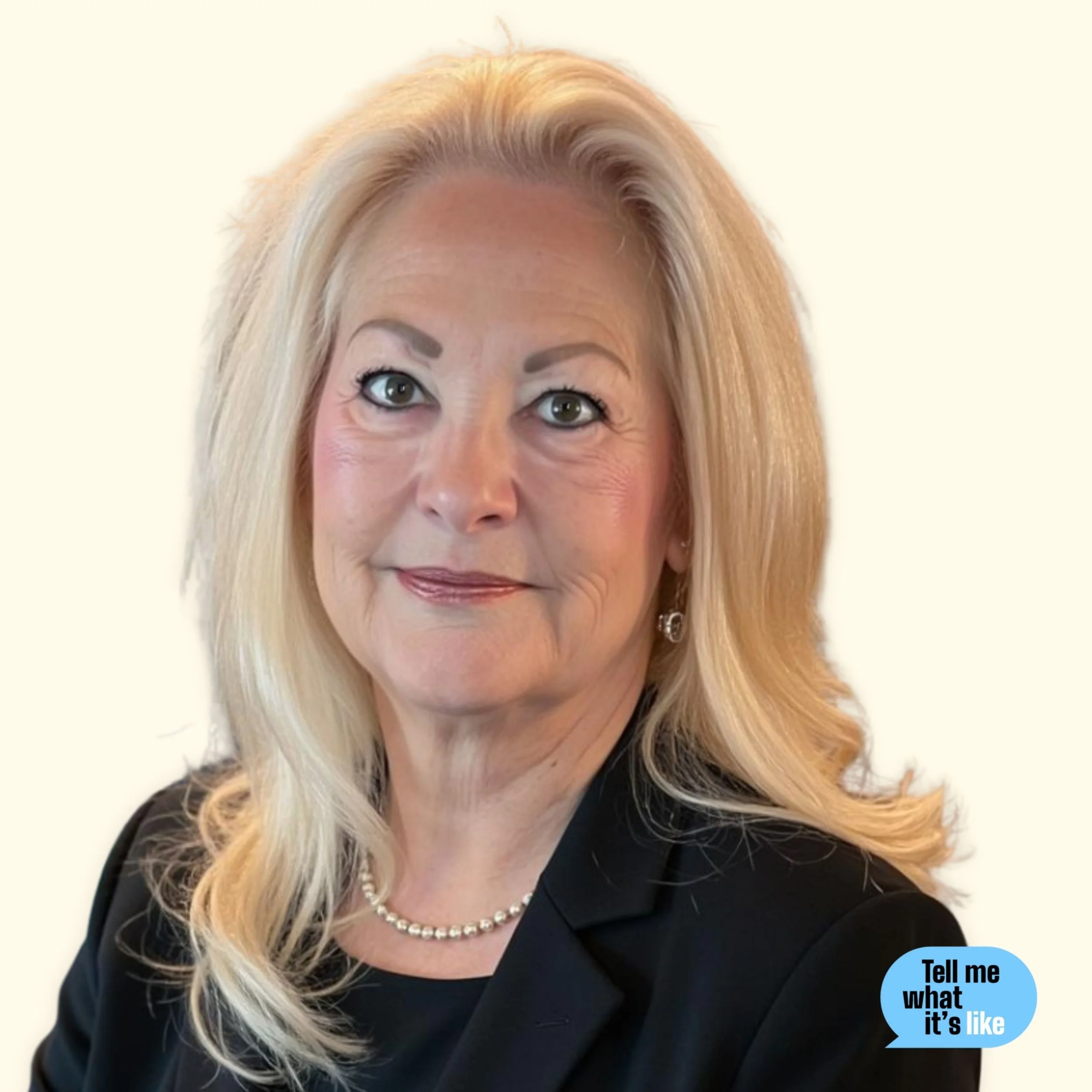
When Lisa Skinner was a teenager, she went to visit her grandmother, who began telling her frantic stories about birds living in her mattress and men trying to steal her jewelry. There were no birds, and there were no men, but Lisa would soon find out that her grandmother had Alzheimer’s disease. That experience shaped the course of Lisa’s life and eventually led her into dementia care, where she’s spent decades helping families better understand what their loved ones are experiencing and how to care for them with compassion and dignity.
In this episode, Lisa shares what she’s learned from both her personal and professional experiences with Alzheimer’s and dementia, including why “joining their reality” can completely change the caregiving experience.
Hear Lisa talk about:
The moment she first realized her grandmother had Alzheimer’s
The difference between Alzheimer’s disease and the umbrella term dementia
How her experiences with eight family members led her into dementia care
Why traditional caregiving instincts often do not work with dementia patients
What it means to “join their reality” instead of correcting them
How person-centered dementia care can help families live more meaningful lives together
Mentioned in this episode:
Lisa Skinner’s latest book on Alzheimer’s and dementia care
“A diagnosis of Alzheimer’s disease does not have to equate to this is the end of the person’s life.”
Episode 39: Transcript
This is “Tell Me What It’s Like,” a show about uncommon experience and the perspective it shapes. I’m Stacy Raine.
Stacy: The day Lisa Skinner got her driver’s license, she decided to head over to her grandma’s house so she could proudly show it off. But instead of the happy visit she expected, her grandmother started telling her wild, frantic stories about birds living in her mattress and men trying to steal her jewelry.
But there were no birds, and there were no men. And that is how a teenage Lisa learned that her grandmother had dementia — and this is the experience that led her to devote her life to dementia care. Lisa, welcome to the show.
Lisa: Thanks so much for having me on your show, Stacy. It’s a huge pleasure to be here today.
Stacy: I’m really glad to have you. I’m excited to talk about this topic, which is not one that people may know a ton about, so I think they’re going to get a lot of information from you. I want to start with that very first experience I was just describing — when you found out your grandmother had dementia.
Can you take me back to that day when she started telling you that there were birds in her mattress? What was your first thought?
Lisa: That is a day that is burned into my memory banks forever. That was 50 years ago, and I still have not gotten beyond that day. It totally took me by surprise — took me aback. I had no idea there was anything wrong with my grandmother, and I saw her regularly. She only lived a few miles from our home.
I went over there, as you said, to show off getting my driver’s license, and as soon as we sat down in her living room, she told me the most far-fetched stories I’ve ever heard anyone tell in my life.
The one thing that kind of prevented me from challenging her on these stories was that I come from the generation where we were taught you don’t contradict your elders. You don’t insult them. You don’t argue with them. That was drummed into my head. And out of respect, I just sat there with my jaw on the floor, not really knowing what to do next or how to respond.
But what I did do, unbeknownst to me — just because of the way I was raised — is I acknowledged what she was telling me. I said to her, “This must be terrifying for you.” And I said, “Can you take me into your bedroom and show me where these birds are getting in and out of your mattress so I can see, and maybe I can come up with a way to fix this problem so you can sleep again?”
So we did that, and of course there were no birds. There was no evidence of any birds. And then she told several other stories in addition to the bird story.
Unbeknownst to me, my grandmother had been calling the police three to four times a week, telling them the same story she had just finished telling me. The first time she did that, they responded to her. They sent an officer to her house to check up on the men breaking in and stealing her jewelry. Of course, they didn’t find anything, but she continued and continued to call.
One day, the chief of police showed up at my mother’s door, and I happened to be home. He said to her, “You need to do something with her. She’s a nutcase.”
Stacy: Oh.
Lisa: He said, “She’s calling us constantly about these birds and people stealing things and these rats running all over her house.” And he said, “We just don’t have the time or the resources to deal with this.” And I was shocked.
This is the chief of police. My grandmother’s calling them because she believes they are there to save her, to help her, to solve her problem and figure out how to relieve her fear. She was terrified. And to have him call her a nutcase — he clearly didn’t understand that there was probably something going on with her.
But again, it was 50 years ago, and my mother responded in a similar way when I went home and confronted her. I said, “Why didn’t you tell me there was something wrong?” And she basically said, “Okay, Grandma’s been diagnosed with senile dementia.” That’s what they called it 50 years ago — not even Alzheimer’s. “And Lisa, we’re not going to talk about this anymore, okay? Do you understand?”
I said, “No, I don’t understand. There’s something wrong with Grandma. We can’t just hide our heads in the sand and pretend it’s going to go away.” But that was her reaction, and that was pretty much the mindset 50 years ago with families who were dealing with some form of dementia.
The Stigma Around Dementia — Then and Now
Stacy: That seems really shocking to me that she just said, “We’re not going to talk about it.” How do you not talk about it? How do you not figure out next steps?
Lisa: I’ll tell you why. There was a terrible, terrible stigma attached to cognitive diseases such as Alzheimer’s and the other hundred or so that exist that cause similar symptoms.
What I was witnessing was her having a delusion — a false belief that those were the birds. She hallucinated that rats were running around her floor. And then paranoia, which is a very common behavior and response to the damage being done to our brains from a brain disease. I was witnessing all three that day.
The stigma still exists today, and we definitely need to bust these myths. But it was very, very prevalent back then because people just didn’t know much about it. Like the police chief — he really hadn’t run into it. The association was being a nut. And this is not mental illness. This is not schizophrenia. This is an actual disease that is damaging whatever part of the brain the disease is attacking.
Stacy: When you said she called the police, in my head I was thinking, “Well, that makes sense. I wonder how often they get calls like this.” But I was really surprised by the reaction they had. Hopefully today there’s a little more training around dementia. Do you know if that’s the case? Do police get trained in this stuff now?
Lisa: Yes, but we’re not nearly where we should be for the number of people who are living with it. There are over 7 million people currently living with this disease just in the United States today. And we’re being told that by the year 2050 — and that’s only 24 years away — the number of people who will develop it is going to triple worldwide. Relative to that, we’re not prepared, and not enough people are trained or even understand it.
Why Dementia Cases Are Projected to Triple by 2050
Stacy: Why do they predict it to triple?
Lisa: For several reasons. First of all, the baby boomer generation — the oldest baby boomers are now turning 80 and older. It’s probably the largest human population ever to exist. So there are a lot of aging adults, starting in the mid-60s and turning the corner into their 80s. And we know statistically that by the time people are 85 years old — and this is a statistic true today — one in three people will be showing signs of dementia.
The other reason is that there are so many risk factors we have uncovered in the last 20, 30, 40 years that have been identified and scientifically backed by studies. There’s evidence that correlates to these risk factors and the way they increase a person’s risk of developing dementia.
A couple of things that are new to these up-and-coming aging generations are increasing too. We didn’t know that toxicity is a risk factor. Air pollution. The foods we eat. There’s a myriad of risk factors. The more that apply to any individual, the more it will increase that person’s risk — and we weren’t aware of that 50 years ago.
A Family History That Led to a Career in Dementia Care
Stacy: Wow, I did not know that. Well, you yourself have had — not just your grandmother, but several family members — experience dementia. So you had a lot of experience with this even before you began studying it.
Lisa: True. Eight total. And the thing is, five of them were blood relatives, so it obviously runs in my family. And that’s a risk factor.
Stacy: It is a risk factor. That’s what I was wondering. So I’m guessing all of this experience — different people in your family having experienced this, and this formative experience with your grandmother — led you to decide, “Okay, this is what I want to study.” Did you make that decision pretty early?
Lisa: No, I didn’t. The day I visited my grandmother, I was 16. After I graduated from high school, I started college, and I wasn’t quite sure what I wanted to major in. Then I took a class in human behavior.
I’ve always been completely intrigued and fascinated by what makes people tick. Why do they behave differently in social situations than they do in organizational environments? I was hooked. So I got my degree in human behavior, and I was just a thirsty, hungry sponge to learn as much as I could because I’m so fascinated by human behavior.
It was really kind of by chance that I ended up going into the profession of being a behavioral specialist. I think it called me — it chose me — probably because of the combination of my fascination with human behavior and what I experienced with eight family members going through dementia caused by a brain disease. People’s behaviors, their personalities, their moods, their cognitive function — it all changes, and that fascinated me.
I wanted to know as much as I could. And of course, with my family having gone through it so many times, I was discovering that other families were too. They were really struggling to understand what to expect, and they weren’t getting any guidance from their physicians.
Even today, physicians aren’t really receiving much education or training on Alzheimer’s disease and dementia. They don’t offer that in medical school, so whatever they know, they learn from their patients. There’s no formal education on it. They only pretty much understand the basics. They don’t have the time to go really deep into it like I have done over the last 50 years, I guess I could say.
From Pharmaceutical Rep to Dementia Specialist
Stacy: Right. They’ve got a lot they’re thinking about, not just this one particular area. So as a behavioral specialist — were you specializing in dementia right away, or did you do some other things? How did you end up here?
Lisa: I actually started out as a pharmaceutical rep.
Stacy: Oh, okay.
Lisa: I worked for a big pharmaceutical company, and then I was also what’s called a physician liaison. So I’ve always had a medical background, which I’ve also been fascinated by.
The only difference between a physician liaison and a pharmaceutical rep is that the pharmaceutical rep basically educates physicians about drugs, and a physician liaison educates and nurtures the relationships between primary care physicians and specialists. The primary care physician will refer their patients to this cardiologist or that orthopedic surgeon, so the position is to be the liaison between the referring physician and the specialist doctors.
Then we moved to Upstate New York because of my husband’s profession, and I was looking for another job. It’s a really small rural area in Upstate New York, and there’s not a whole lot offered professionally up there. I answered an ad to be a community counselor at an assisted living facility that also had a memory care wing, and I got the job.
My job was to do assessments on people who were considering moving there to see if they were a good fit. The assessments helped identify what their care plan needed to be. And literally the job was helping counsel family members through the transition they were coming from — which was a hospital bed or their own home. That was my introduction to working with families in the dementia world.
It was such an unbelievable fit for me that I knew — I felt like I was home. And I’ve been doing it professionally now for 30 years.
The Shift from Reality Orientation to Person-Centered Care
Stacy: Yeah, it does seem like it was calling to you. Like your life was sort of pointing this way. So what does your job look like? How do you help families and caregivers?
Lisa: I would say I have trimmed it down from what I used to do, which was actually work hand in hand with family members and also with people living with dementia, and help them understand the disease. I ended up with my own consulting business.
But in the institutional arena, I worked my way up to a regional director. I managed five buildings and trained all the staff on how to effectively care for people with dementia based on a newer methodology that came out maybe 20-plus years ago called a person-centered approach to dementia care.
That was very different from what the current methodology was when I first started, which was called Reality Orientation Therapy. We were trained to correct a person’s beliefs if they didn’t align with ours. So if they thought it was a Saturday, but it was really a Wednesday — well, that’s a false fact, and we would correct them. We would steer them back into the healthy brain person’s reality. And it didn’t work.
They practiced that for decades. What happened was it just ended up creating more anxiety and more frustration for the person with dementia. What we learned through the school of hard knocks was that whatever they’re telling us is their truth. It is what they believe. And there is no therapist or staff member on the planet who can convince them otherwise.
It just created so much conflict between staff and the residents of the dementia unit, and it would result in complete meltdowns for the people living with it because they felt dismissed. They didn’t feel they were being taken seriously. It’s like, “Why don’t you believe me when I tell you it’s Saturday? I know it’s Saturday.” Because that was their reality.
This is what we learned from trying to steer people, because we’re wired to want to fix people — especially our loved ones. We don’t want to see them hurt or suffer or believe things that aren’t our truth.
So this new methodology was created called a person-centered approach to dementia care. I was one of the first people to be introduced to it when it first surfaced 20, 25 years ago. And boy, did I see things change. What a difference it makes to acknowledge somebody’s feelings, to validate their beliefs, to reassure them they’re not crazy.
It made all the difference in the world. I have literally witnessed positive outcomes because of this new methodology that was so different from trying to correct people and steer them into a different reality from what they believed was true.
Dementia vs. Alzheimer’s: Understanding the Difference
Stacy: So let’s talk about that different reality, because I’m thinking of all these movies and books we read that have this scenario, right? Where the main character wakes up and their reality is different — maybe it is Saturday to them and it’s not to everyone else.
Imagine how jarring that would be. You wake up thinking it’s Saturday, and someone’s like, “No, it’s not. It’s Wednesday. Look at the calendar.” You would think you’d landed on a different planet.
So it is their reality. Let’s talk about why that is their reality. What is happening? Dementia, I know, is not a diagnosis, right? That’s the symptom. There are actually many diagnoses, but dementia isn’t one.
Lisa: This is a great thing to clarify, because a lot of people don’t quite understand why we sometimes say dementia and sometimes say Alzheimer’s disease. Let me quickly clarify that for your audience.
There are over 100 known brain diseases today that we know about. Alzheimer’s is the most common one, and the one the majority of people in the world have. Alzheimer’s disease is considered a neurodegenerative disease, or a brain disease. The hallmark of Alzheimer’s is that it initially attacks our short-term memory.
There are other brain diseases that people are starting to hear about because they’re being talked about in the media more than they’ve ever been. Lewy body dementia is the one that Robin Williams was diagnosed with. Frontotemporal dementia is the one Bruce Willis has. There’s vascular dementia, which is actually caused by strokes.
When I say dementia — what we ended up doing was putting all the signs, symptoms, and behaviors that show up (based on the damage being done to the part of the brain the particular disease is attacking) into a bucket, which we use as an umbrella term: dementia. So when we say the word dementia, it’s synonymous with signs, symptoms, and behaviors that we witness as a result of a person’s brain changing because of the damage being done.
Can I address your other question about why people have different realities? This is a perfect segue.
Why People with Dementia “Time Travel” Into Different Realities
Lisa: As I mentioned, Alzheimer’s disease is the most common brain disease that causes dementia. Lewy body is a brain disease that causes dementia. Vascular damage from strokes is another condition that causes dementia.
The other thing a lot of people don’t realize is that it’s not uncommon for people to have what we call mixed dementia — they actually have more than one of these brain diseases developing in their brain simultaneously. So you can have vascular dementia and Alzheimer’s at the same time, and a lot of the symptomology overlaps between the different brain diseases.
The hallmark of Alzheimer’s is that it damages short-term memory first, then moves on to other cognitive function abilities. What happens is the more damage that’s done to the short-term memory — think of the short-term memory in the beginning of the disease, as a person’s progressing through the various stages, it’s functioning pretty normally. You don’t notice a lot of signs that there is a decline.
As a person moves closer into the mid stage, enough damage has been done to the short-term memory — and think of it like it has an off and on switch attached to it. Sometimes the short-term memory switch is off, and sometimes it’s on, about 60/40.
By the time somebody progresses into the very last stage of Alzheimer’s disease, that short-term memory switch is either completely off and they have no short-term memory left whatsoever, or when it goes on, it’s very brief. They might have short-term memory recall for just a very finite period of time, like minutes, and then the short-term memory short-circuits and malfunctions. When that happens, they’re pulling from their long-term memories — because our long-term memories stay intact the whole time.
This is why, when that short-term memory switch flips off, people are actually time traveling back into a different timeframe of their life. It’s somewhere back in time, and it’s different for everybody.
Some people regress back to their childhood and think they live in their parents’ home where they grew up. So if they don’t recognize their current home surroundings, if it’s not familiar, they might be saying to you all the time, “I want to go home. I want to go home. I want to go home.” Because they’re looking for a place that’s familiar. With dementia, familiarity represents safety and security, and they don’t know where they are because in their minds they’re living back in 1945, or ’40, ’50.
So you have to follow the cues. If your loved one is saying, “I want to go home, I want to go home,” that’s a cue that maybe the short-term memory just malfunctioned and they think they’re living in a different period of their life — looking for the home that’s familiar to them. Now, if they’ve regressed back into their 30s, they probably are married and have their own family, so they’d be looking for that home.
Stacy: And that family. I mean, that’s got to be really scary and disorienting for that person. Where is my spouse? Where are my kids?
Lisa: When you get to this point in the progression of the disease, their whole existence really is about looking for familiarity — things that make sense — because their world no longer makes sense to them. That is what helps them feel safe and secure.
This is one of the most fundamental things people need to understand about Alzheimer’s disease. If your loved one’s short-term memory short-circuits and they’re pulling from their long-term memory, and they start talking about things that make no sense to you, that’s a pretty strong clue that this has just happened — and now they’ve traveled back into a different timeframe of their life.
Maybe they’re going to say to you, “Oh, I have to pick Nancy up at school. It’s time. She’ll be getting out of school pretty soon.” And you’re like, “Nancy? Nancy’s 40 years old. Why would you be going to pick Nancy up?” Because in their mind, they’re back when Nancy was maybe six, seven, eight years old. Is this making sense?
Stacy: It makes a lot of sense. So this is when you say this is their reality versus your reality. Their reality feels real to them.
Lisa: Yes.
Stacy: But you can’t take them to go pick up Nancy. As you said, Nancy’s 40. So how do you, if we are taking this person-centered approach you mentioned earlier and we want to make them feel safe, but we can’t take them to pick up a 10-year-old or 8-year-old Nancy — what do we do?
Joining Their Reality: How to Meet a Loved One Where They Are
Lisa: We use learned communication skills, and this is what I teach. I’m a certified dementia practitioner, and I have been specifically trained to be an expert in a person-centered approach to care. This is part of what I do, what I’ve written in my books, and what I talk about on my podcast and my television show.
This component of a person-centered approach to dementia care is called joining their reality — meeting them where they are in their mind. There are very skilled communication techniques that will effectively relieve their concern about believing that Nancy is sitting at school waiting for Mom or Dad to pick her up. We know that person believes it 1,000 percent, and nothing we can say to them is going to change that reality. So we have to —
Stacy: If I’m in this life of being a parent and needing to pick up my child, I cannot imagine how distressing it would be if I think I need to go pick them up and I can’t do that.
Lisa: I have a quick story that will really illustrate a real experience I had with one of my eight family members. As I mentioned, five were blood relatives and the other three were through marriage. One of them was my mother-in-law.
My husband’s mother had Alzheimer’s disease, and her primary caregiver was my husband’s youngest sister, who lived with my mother-in-law after my father-in-law passed away. So the other siblings — we took turns taking care of Mary Ann to give Alice a break on the weekends.
We had her this one weekend, and I was sitting in the living room. We were having a really pleasant conversation, and we had Andy Griffith on the television — the reruns — which she related to because she remembered them from all her adult years. Everything just seemed fine.
Stacy: Mm-hmm.
Lisa: And then, out of nowhere, in the turn of a dime, she stands up — pops up off the living room sofa — and she is as nervous as I’ve ever seen her. She said, “I’ve got to go home. I’ve got to go home. Somebody take me home right now.”
I said, “Mary Ann, what’s the matter? You seem so nervous and upset about something.” She said, “Marty’s at home waiting for me. I didn’t realize it was this late.” And she pretended like she was looking at a watch she didn’t have on. She said, “It’s almost his dinner time, and I have to get home to fix him dinner, or he’s going to be really upset. Will you take me home? I’ve got to get to him.”
Stacy: Yeah. Uh-oh.
Lisa: He had died five years earlier.
Stacy: He’s not there.
Lisa: No. But that short-term memory switch flipped off at that moment, and she traveled back to an earlier time in her life — and Marty was alive and well and waiting for her at home to come home from her son’s house and feed him dinner.
Stacy: I love how you say “traveled back,” because she had literally gone back in time.
Lisa: She had, in her mind. It’s a real thing that happens to them. They pull from those long-term memories because the short-term memory just short-circuited. It doesn’t exist for her in that moment. It could come back, but we never know. That switch is on, off, on, off, on, off, and you just don’t know when it’ll come back on and she’ll be back to a joint reality.
It was clear to me her short-term memory had malfunctioned. She was pulling from her past, believing her deceased husband was still alive. So now I had to figure out how to calm her down, because she was starting to panic. She knew she needed somebody to take her to her home, and she was relying on me or her son or one of her grandkids. She was just very nervous about not being there. I think she thought he was going to be really mad.
I had to come up with something really quickly. I said, “Oh, Mary Ann, no, no, it’s okay. Marty knows you’re here.”
Stacy: Oh.
Lisa: And it wasn’t really telling a lie. It was acknowledging. I said, “I can see how upset you are.” So I’m acknowledging her emotions. I said, “And I see how important it is for you to get to him so you can give him his dinner. But he actually knows you are here, because he called a while ago.” And Roy, her son, said, “Oh, she’s having a great visit with us. It’s really pleasant. We’re kind of reminiscing on Andy Griffith reruns.” And he said, “Okay. Well, make sure she understands I don’t want her to feel rushed, and I’ll see her when she gets here.”
So I told her that, and she said, “Really?”
Stacy: Mm-hmm.
Lisa: “He’s okay with me staying a little longer? I’m really enjoying my visit here.” I said, “Absolutely he’s okay with it. He was really worried that you were going to feel like you had to rush home to him. But he’s fine.” And she said, “Well, okay. Then I’ll stay a little longer.”
She sat back down, and it completely diffused where this whole thing was headed — which was to a meltdown on her end if I didn’t react to her needing to get to him. Because, like you said, there was no Marty waiting for her at home. I was just hoping that her short-term memory switch would flip back on and she wouldn’t remember this whole thing. And that’s actually what happened.
We resolved it for the time being and de-escalated the thing that was concerning her so much. After she sat back down and we got back into what we were doing before this whole incident, her short-term memory came back, and she never mentioned having to get to him again. We ended up taking her home shortly after. It was over in a minute.
But while she was in that panic mode, thinking he was there waiting for her, she wasn’t going to let go of that. And they don’t. Once they have a belief, they don’t let go of it until they get some sort of resolve or satisfaction to what is worrying them, bothering them, concerning them.
That’s an example of how I joined her reality instead of saying, “Mary Ann, I’m confused.”
Stacy: Mm-hmm.
Lisa: “Don’t you remember that Marty passed away five years ago? What are you talking about? How could he possibly be waiting for you at home?” That would be an instinctive response. It’s like, “Oh my gosh, what is Mom talking about? I’m worried about her sanity.” We want to fix them. We want to correct them. And that, we’ve learned, just makes situations worse.
In the best interest of our loved ones, we have to figure out a way to calm them down — because she was reacting on emotion. She lost her ability to reason the situation out, which happens with dementia. They lose that completely, especially in the stage she was in. There was nothing anybody could do to convince her Marty wasn’t at home waiting to be fed.
So to find a way to de-escalate the situation and find resolve, I had to reassure her that I understood how she was feeling. I acknowledged how she was feeling, and then I had to quickly come up with a resolution. That’s what I came up with. And it worked.
What Caregivers Need to Know
Stacy: While you were telling me that story, I felt very sad — not only for your mother-in-law, but also for you and your husband. Where she’s in a different reality, and she’s panicked. It’s sad for her — she’s thinking she’s in a different place than she is. It must have been really sad for the two of you.
It makes me think of the situation of the caregiver as well. Your caregiver has a reality; the person who’s experiencing dementia has a reality. Those two don’t often mesh. When someone’s saying, “Oh, your dad’s waiting for me,” when your dad’s actually passed away, that must be hard. What are some things caregivers need to know?
Lisa: Another approach is to say something like: “Oh, that’s right. Marty knows you’re here and that you’ll be coming home shortly to feed him dinner. We’re going to get going in a short period of time, but it doesn’t have to be right this minute. So why don’t we enjoy a warm cup of tea before I take you home? And then we’ll get in the car, and I’ll take you to him.”
You’re just hoping and praying she’ll kind of come out of being in that timeframe, and then you have to think of something else. There are a lot of techniques and skills — communication skills, diversion techniques, redirecting techniques — that can resolve it for the moment. Then you kind of have to see if by then she’s off the belief that she’s got to get home.
You have to take it minute by minute, day by day. But once you learn how to insert these skills into the situation, they become more second nature than our initial instinctive reaction. We really have to retrain our brains to learn how to effectively respond to the mind of a person living with dementia, because it is very incongruent to ours. They don’t match up at all.
Stacy: I imagine that being a caregiver is hard. You mentioned your husband’s sister — you would need to give her breaks. It can be quite intense at times. So what advice do you have for caregivers outside of just learning these techniques?
Lisa: I can honestly say, from both professional and personal experience, that caring for a person who is progressively losing their cognitive abilities — and it’s every cognitive ability: memory, reasoning, logic — they suffer from mood swings, they feel depressed. It just goes on and on.
While you’re standing there or sitting there helplessly watching them lose cognition and seeing it decline to the point where they can’t really function on a day-to-day basis the way they did when their brains were healthy — they need a lot of help and cueing. It really becomes one of the most challenging jobs any of us will ever have to undertake.
You’re trying to communicate with somebody who doesn’t understand you anymore and doesn’t understand the world they’re living in anymore. We have to be that guide for them. And if we don’t know what we don’t know — how to make that happen for them, how to provide that for them — then you’re in a constant state of conflict. You’re on that proverbial hamster wheel, and you just don’t know how to get off. You’re constantly just reacting to everything.
This is why a person-centered approach to dementia care, and the other components that go along with it — like joining their reality, knowing how to implement reminiscence therapy into your daily routine, knowing how to set up a routine that’s familiar and secure and safe — is all part of this. It takes knowledge.
A Diagnosis Isn’t the End: A Better Way Forward
Lisa: What I have seen come out of this, personally and professionally, is that now we have the knowledge, the skills, and the tools available to provide a meaningful, purposeful, joyful, dignified life for people that we never would have thought possible. It just turned the entire landscape of living with dementia around — for those who possess these skills and understand what’s happening to their loved ones as the disease progresses.
What I emphasize to everybody — and this isn’t just conjecture, this is based on fact and what I’ve witnessed and what I’ve learned and experienced, thousands of families later — is that a diagnosis of Alzheimer’s disease does not have to equate to “this is the end of the person’s life.”
Unfortunately, that’s a stigma that existed 50 years ago when my grandmother’s whole experience surfaced, and a lot of people perceive it that way today because they really don’t know what they don’t know — that there is another way.
Their life will change. It’s not going to be the same life they had before, but it’s a true partnership. You know the saying, “It takes a village”? By developing and building a partnership with family members and caregivers and the medical team, this is all very possible — to live very fulfilling lives. I have witnessed it over and over again. It makes me so happy to see that people can still feel joy and feel like there’s a reason for them to get up in the morning, and that they do matter, even though they’re living with brain disease.
Stacy: Yeah, and for them and for their caregivers, it does not mean everything’s over. I love that you say that, because I do think when someone receives this diagnosis, it can be exceptionally scary just from all the things you hear and see with this set of diseases. But the fact that there is a way — if you can figure out how to get the knowledge and learn some of these techniques, you can continue to have happy years. I think that’s important.
Lisa: It really comes down to relearning what works, because it’s not instinctive for us. It’s actually counterintuitive to do the things that we now know are effective. They’re probably opposite of what we think is going to be effective — like trying to fix them, trying to correct them.
Stacy: Yeah. You can’t bring them back to your reality. You just have to be with them where they are.
So you’ve had 30 years of experience helping families and caregivers who are experiencing this disease. You’ve lived through this transition into the person-centered approach. You’ve got just vast experience here. What has it taught you? What have you learned about this disease, about the world — besides the fact that, like we said, it’s not over, there are still plenty of happy years?
The Most Fundamental Lesson: We All Share the Same Basic Human Needs
Lisa: Probably one of the most fundamental things I’ve learned — and it has to do with human behavior and psychology — is that we are all very similar creatures.
When I was in college, I learned about Maslow’s hierarchy of needs. The very basic need is safety and security, and then it gets more and more in-depth and complicated all the way up to reaching nirvana and having self-actualization. But everybody’s basic human needs are part of our DNA, and we don’t really vary from those basic human needs. That’s probably the biggest lesson I’ve learned.
When we live with diseases that are damaging our cognitive abilities, we actually revert back to the very basic human needs all of us possess — to feel safe and secure and loved, and that we matter, and that we have a purpose. If we know how to tap into that, then we can make their lives still very meaningful.
That’s really what it boils down to. It’s human psychology. It’s human need. It’s human instinct. That’s what I’ve learned — probably the most fundamental and most profound thing. Because all of these techniques we use to defuse the situations, to respond to what we hear they believe, it really comes down to confronting and satisfying those basic human needs in every aspect. You just have to understand that, and then learn how to accomplish it.
It sounds a little more simplistic than it actually is, but in a nutshell, that’s really what we’re doing. There’s a lot to it. There’s a lot to learn and a lot to know. But once you do, and you understand it, you will see the results — being able to turn a potentially really negative situation into a positive outcome for everybody, for the caregivers, for the family members.
You don’t have to live the next 20 years constantly being in conflict with the person you love because there’s a disconnect between your reality and their reality. That’s what we know we can do now. We have the knowledge. We have the skills. We have the know-how, the techniques. And we’ve seen them for a quarter of a century now — being able to provide a much more stable, joyful existence for people, right up until the end.
Stacy: Well, Lisa, this was a fascinating conversation and full of really helpful information about dementia. So thank you so much for joining me. I sincerely appreciate it.
Lisa: Oh, it’s my pleasure, and thanks again for having me on. I think it’s so important for people to hear these things and know that there’s a better way. There’s a better way.
Continue the Conversation
Listen & Follow Tell Me What It’s Like
Follow the show so you don’t miss future conversations about uncommon experiences and the perspectives they’ve shaped.
Know someone who would enjoy this story?
Send them this episode.